⚡ Quick Answer: Who Owns LinkedIn in 2026?
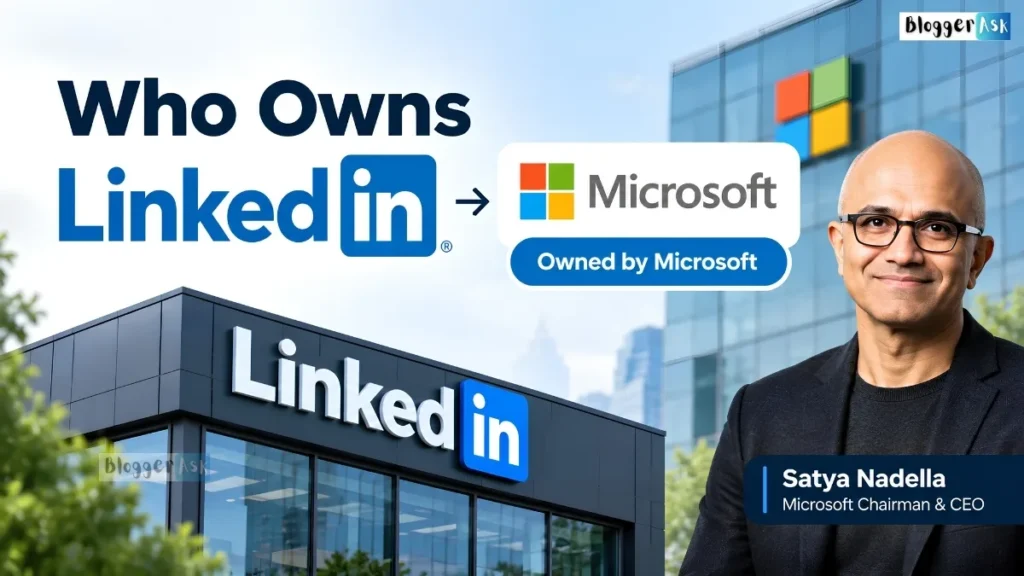
LinkedIn is owned by Microsoft. Microsoft bought LinkedIn in December 2016 for $26.2 billion in an all-cash deal, and LinkedIn has operated as a wholly-owned Microsoft subsidiary ever since. Reid Hoffman founded LinkedIn in 2002, and the company’s current CEO is Daniel Shapero, who took over in April 2026.
Key Takeaways
- Owner: Microsoft Corporation (NASDAQ: MSFT) — 100%, wholly-owned subsidiary
- Acquired: Deal announced June 13, 2016; closed December 8, 2016
- Price: $26.2 billion announced deal value ($27.0 billion final purchase price per Microsoft’s accounting)
- Founder: Reid Hoffman, with four co-founders, in December 2002
- Current CEO: Daniel Shapero, since April 22, 2026
- FY2025 revenue: $17.81 billion, per Microsoft’s own investor disclosures
That covers the headline facts. If you want the full picture — how the deal actually worked, what changed in LinkedIn’s leadership this year, and what LinkedIn is worth today — the rest of this article breaks it down.
Is LinkedIn Owned by Microsoft?
Yes. LinkedIn is a wholly-owned subsidiary of Microsoft Corporation (NASDAQ: MSFT). Microsoft owns 100% of LinkedIn — there are no outside shareholders, no separate stock, and no minority owners holding a piece of the company independently of Microsoft.
That’s been true since December 2016, when Microsoft’s acquisition officially closed. Before that, LinkedIn was its own publicly traded company on the New York Stock Exchange under the ticker LNKD.
What “Wholly-Owned Subsidiary” Actually Means
In plain terms: LinkedIn doesn’t have its own board of directors independent from Microsoft, doesn’t file its own separate public earnings, and doesn’t answer to its own shareholders. Microsoft is the sole owner, and LinkedIn’s financial results are folded into Microsoft’s own earnings reports under a segment called Productivity and Business Processes — the same segment that includes Microsoft 365 and Dynamics 365, as shown in Microsoft’s own investor reporting.
Can You Buy LinkedIn Stock?
No. Since LinkedIn isn’t independently traded, there’s no LNKD ticker to buy anymore. If you want financial exposure to LinkedIn’s performance, the only route is buying Microsoft stock (MSFT). LinkedIn’s revenue contributes to Microsoft’s overall results, but you can’t invest in LinkedIn on its own.
How Much Independence Does LinkedIn Still Have?
When the deal was announced, Microsoft said in its official acquisition announcement that LinkedIn would “retain its distinct brand, culture and independence.” A decade on, that’s held up in one sense and not another. LinkedIn still runs its own product and keeps its own brand identity, and it has had its own CEO and leadership team throughout. But it doesn’t set its overall strategic direction in isolation — big bets, like LinkedIn’s recent push into AI hiring tools, are increasingly coordinated with Microsoft’s broader AI strategy, especially now that LinkedIn’s former CEO has moved into a role overseeing AI development across both LinkedIn and Microsoft Office (more on that below). In short: operationally distinct, but not strategically independent.
The Microsoft Acquisition — How and When It Happened
Microsoft’s purchase of LinkedIn is still one of the largest acquisitions in the company’s history. Here’s exactly how it played out.
Deal Timeline: Announcement to Close (June–December 2016)
Microsoft and LinkedIn announced the deal on June 13, 2016. Under the terms laid out in the companies’ joint press release, Microsoft agreed to acquire LinkedIn for $196 per share in an all-cash transaction, with LinkedIn’s board and controlling shareholder — founder Reid Hoffman — both backing it. It took about six months to clear shareholder approval and regulatory review, including sign-off from the European Commission. The acquisition officially closed on December 8, 2016.
How Much Microsoft Paid for LinkedIn
You’ll almost always see this deal cited as $26.2 billion — that’s the value announced by the two companies in June 2016, based on $196 per share. Microsoft’s own 10-K filing on the completed transaction lists a slightly different, final number: a total purchase price of $27.0 billion, made up primarily of $26.9 billion in cash, reflecting adjustments made by the time the deal actually closed. Both figures are accurate — they just describe two different moments in the deal. The total deal value made this Microsoft’s largest acquisition at the time; it has since been surpassed by Microsoft’s 2023 purchase of Activision Blizzard.
Deal Facts at a Glance
| Detail | Figure |
|---|---|
| Announcement date | June 13, 2016 |
| Deal close date | December 8, 2016 |
| Price per share | $196 |
| Announced deal value | $26.2 billion |
| Final completed purchase price | $27.0 billion (per Microsoft’s SEC filings) |
| Payment type | All-cash |
| Financing method | New debt issuance |
| Microsoft CEO at signing | Satya Nadella |
| LinkedIn CEO at signing | Jeff Weiner |
Why Microsoft Wanted LinkedIn
Microsoft framed the deal, in its own words at the time, as bringing together its cloud and productivity business with the world’s largest professional network — pairing LinkedIn’s professional data and user base with Microsoft’s Office and productivity tools. That integration has since shown up in features connecting LinkedIn profiles to Outlook, Teams, and Dynamics, and more recently in LinkedIn’s own AI-powered hiring and sales tools.
Who Founded LinkedIn?
Reid Hoffman and the Co-Founding Team
LinkedIn wasn’t a solo venture. It was founded by Reid Hoffman along with four co-founders: Allen Blue, Konstantin Guericke, Eric Ly, and Jean-Luc Vaillant. Hoffman, a former COO of PayPal, led the founding team and provided much of the early strategic direction and investor relationships, but the platform was built collaboratively from the start.
When Was LinkedIn Actually Founded?
You’ll see both “2002” and “2003” attached to LinkedIn’s founding, and both are correct — they just refer to different milestones. LinkedIn was founded (incorporated) in December 2002, developed out of Hoffman’s living room in Palo Alto, California. It then publicly launched on May 5, 2003, with roughly 4,500 initial members drawn from the founders’ personal and professional networks.
What Happened to the Founders After the Sale
Reid Hoffman stayed closely tied to Microsoft well after the acquisition. He joined Microsoft’s board of directors in 2017, a year after the deal closed, and served there for nearly a decade. In June 2026, Hoffman announced he would not stand for re-election to Microsoft’s board, stepping away at the end of the year to focus full-time on his AI drug-discovery startup, Manas, according to CNBC’s coverage of the announcement. Jeff Weiner, LinkedIn’s CEO at the time of the sale, stayed on as CEO through 2020 before moving into the role of executive chairman.
Who Is the CEO of LinkedIn in 2026?
Current CEO: Daniel Shapero
As of September 2026, LinkedIn’s CEO is Daniel (Dan) Shapero. He took over on April 22, 2026, after Ryan Roslansky stepped down from the CEO role following six years in the job, as CNBC reported at the time. Shapero isn’t new to the company — he joined LinkedIn in 2008 and most recently served as its Chief Operating Officer, giving him deep familiarity with the business before stepping into the top job.
LinkedIn’s Leadership Timeline: Weiner → Roslansky → Shapero
LinkedIn CEO Succession
| CEO | Tenure | What Happened Next |
|---|---|---|
| Jeff Weiner | 2009 – June 2020 | Became LinkedIn’s Executive Chairman |
| Ryan Roslansky | June 2020 – April 2026 | Promoted to Executive Vice President at Microsoft, overseeing both LinkedIn and Microsoft Office |
| Daniel Shapero | April 2026 – present | Current CEO; previously LinkedIn’s COO since 2021, with the company since 2008 |
Roslansky’s exit from the CEO seat wasn’t a departure from the company. He’d already taken on the added role of EVP of Microsoft Office in mid-2025 while still running LinkedIn, and in April 2026 he formally handed the CEO title to Shapero to focus fully on that broader Microsoft mandate — leading AI strategy across both LinkedIn and Office, per GeekWire’s reporting on the reshuffle. Under his six years as CEO, LinkedIn’s membership grew from roughly 700 million to more than 1.3 billion. In the same reshuffle, LinkedIn’s longtime engineering leader, Mohak Shroff, was promoted to president of platforms and digital work, also reporting to Roslansky.
How LinkedIn’s Leadership Reports to Microsoft Now
Here’s the nuance most casual coverage misses: Shapero holds the CEO title, but he reports to Roslansky, who — now an EVP at Microsoft — sits above him in the reporting structure, a detail confirmed by both CNBC and GeekWire. Roslansky, in turn, reports to Microsoft CEO Satya Nadella. So the chain of command runs Shapero → Roslansky → Nadella, even though Roslansky is no longer LinkedIn’s CEO. It’s a structure built for continuity: Microsoft promoted from within rather than bringing in an outside executive, with Shapero running LinkedIn day to day while Roslansky focuses on AI strategy at the group level.
How Much Is LinkedIn Worth?
Microsoft doesn’t disclose a standalone valuation for LinkedIn — since it’s a subsidiary, not an independently traded company, there’s no market cap to point to. What Microsoft does disclose is LinkedIn’s revenue, and that gives a useful sense of scale.
LinkedIn’s Revenue Growth Since 2016
LinkedIn generated $17.81 billion in revenue for Microsoft’s fiscal year 2025 (the 12 months ending June 30, 2025), up 9% year-over-year, according to Microsoft’s own investor disclosures. That momentum has continued into the current fiscal year: GeekWire reported that in the quarter ending December 31, 2025, LinkedIn crossed $5 billion in quarterly revenue for the first time, up 11% year-over-year — putting the business on an annualized run rate of more than $20 billion. LinkedIn now has roughly 1.2 to 1.3 billion members worldwide (Microsoft’s own reporting has cited figures in this range across recent quarters), with premium subscriptions alone surpassing $2 billion in annual revenue.
For comparison, LinkedIn’s last full year of revenue as an independent public company, in 2015, was roughly $3 billion — meaning revenue has grown nearly sixfold in the decade since Microsoft’s acquisition.
Has the Acquisition Been a Success for Microsoft?
By the revenue numbers, yes — this is one of the more clearly successful large acquisitions in Microsoft’s history. That’s a read of the financial trend, though, not a verdict on the platform’s cultural reception. LinkedIn’s growth into a place for career-advice content and professional oversharing has drawn plenty of criticism alongside its financial growth, and how “successful” the deal looks depends on whether you’re measuring it in dollars or in user sentiment.
Who Owns LinkedIn? Full Ownership Summary at a Glance
Ownership Summary (September 2026)
| Question | Answer |
|---|---|
| Who owns LinkedIn? | Microsoft Corporation (100%, wholly-owned subsidiary) |
| When did Microsoft acquire it? | Deal closed December 8, 2016 |
| How much did Microsoft pay? | $26.2 billion announced value; $27.0 billion final purchase price |
| Who founded LinkedIn? | Reid Hoffman, with Allen Blue, Konstantin Guericke, Eric Ly, and Jean-Luc Vaillant |
| When was it founded? | Incorporated December 2002; launched publicly May 5, 2003 |
| Who is the current CEO? | Daniel Shapero (since April 2026) |
| FY2025 revenue | $17.81 billion |
| Approximate members | 1.2–1.3 billion worldwide |
| Who owns Microsoft (LinkedIn’s parent)? | Publicly traded (NASDAQ: MSFT); largest shareholders are index funds like Vanguard (~9–10%) and BlackRock (~7–8%) — no single controlling owner |
Ownership Structure at a Glance
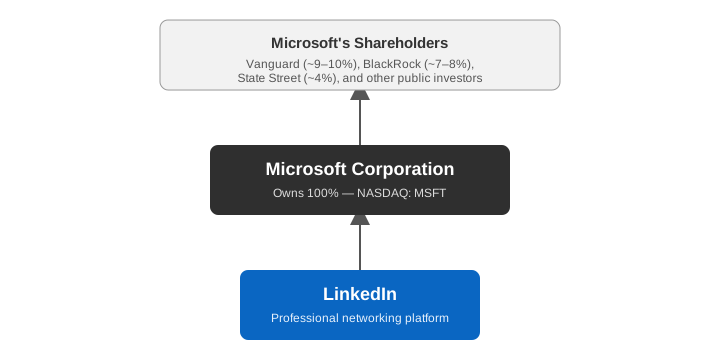
LinkedIn is fully owned by Microsoft, which is itself a publicly traded company with no single controlling shareholder.
LinkedIn CEO Leadership Timeline
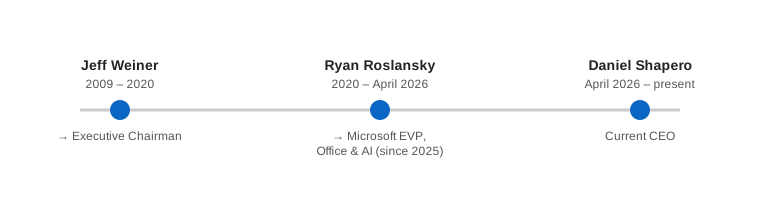
LinkedIn’s CEO changed most recently in April 2026 — much of the content still online hasn’t caught up to this.
The Bottom Line
Who owns LinkedIn comes down to one clear answer: Microsoft, fully and exclusively, since December 2016. But ownership is only part of the story. The company Reid Hoffman founded in a Palo Alto living room in 2002 is now generating close to $18 billion a year under Microsoft’s umbrella, and it just went through its biggest leadership change since the acquisition — Daniel Shapero taking over as CEO in April 2026, while former CEO Ryan Roslansky moves into a broader AI role at Microsoft overseeing LinkedIn itself. If you’d searched this question a year ago, the ownership answer would have been the same — but the leadership answer would have been wrong.
Frequently Asked Questions
Who sold LinkedIn to Microsoft?
LinkedIn’s board of directors and its controlling shareholder, founder Reid Hoffman, agreed to the sale in June 2016. Hoffman publicly backed the deal and committed to voting his shares in line with the board’s recommendation, as stated in the original deal announcement.
Is LinkedIn still owned by Microsoft?
Yes. As of September 2026, LinkedIn remains a wholly-owned subsidiary of Microsoft, with no changes to that ownership structure since the 2016 acquisition closed.
Who owned LinkedIn before Microsoft?
Before the acquisition, LinkedIn was an independent, publicly traded company on the New York Stock Exchange (ticker: LNKD), with Reid Hoffman as its largest and controlling shareholder alongside early venture investors like Sequoia Capital and Greylock Partners.
Does Elon Musk or Meta own LinkedIn?
No. Neither Elon Musk nor Meta has any ownership stake in LinkedIn. Musk has publicly criticized LinkedIn’s culture on his own platform, X, which has fueled some online confusion, but that commentary has no bearing on who actually owns the company — Microsoft does.
Who owns LinkedIn’s data?
As a wholly-owned subsidiary, any data LinkedIn collects falls under Microsoft’s corporate ownership and governance, though LinkedIn maintains its own separate privacy policy and terms of service that govern how member data is collected and used.
📖 Continue Reading:
Disclaimer
This article is for general informational purposes only. It draws on public SEC filings, Microsoft’s own investor disclosures, and reporting from CNBC and GeekWire (linked inline above). Revenue figures, shareholder percentages, and leadership details are current as of September 2026; corporate ownership stakes, executive roles, and financial figures change over time and should be independently verified against Microsoft’s most recent investor disclosures for any decision-making purposes. This is not financial or investment advice.

Olivia Isabel is a Business & Technology Writer specializing in corporate ownership, company leadership, shareholders, acquisitions, and the business strategies behind major global companies. Her work covers technology, artificial intelligence, social media, finance, e-commerce, automotive, and consumer technology, with a particular focus on explaining who owns, controls, and leads well-known companies.
With a background in Economics and Journalism, Olivia approaches each topic as a research-driven business story. She examines company filings, investor-relations materials, regulatory records, official corporate announcements, and reputable financial sources to distinguish between legal ownership, economic ownership, voting control, and day-to-day management.
Her articles explore the founders behind major companies, current CEOs, significant shareholders, parent companies, subsidiaries, acquisitions, and changes in corporate structure. She has written about companies including Google, Alphabet, Apple, Microsoft, Amazon, Meta, OpenAI, Tesla, SpaceX, YouTube, Instagram, TikTok, WhatsApp, Reddit, Spotify, and other major technology and consumer brands.
Olivia’s goal is to make complicated corporate and financial information clear, accurate, and useful for everyday readers. She is particularly interested in corporate strategy, technology business models, entrepreneurship, emerging AI companies, public markets, and the evolution of globally recognized brands.