⚡ Quick Answer: Who Owns Waymo in 2026?
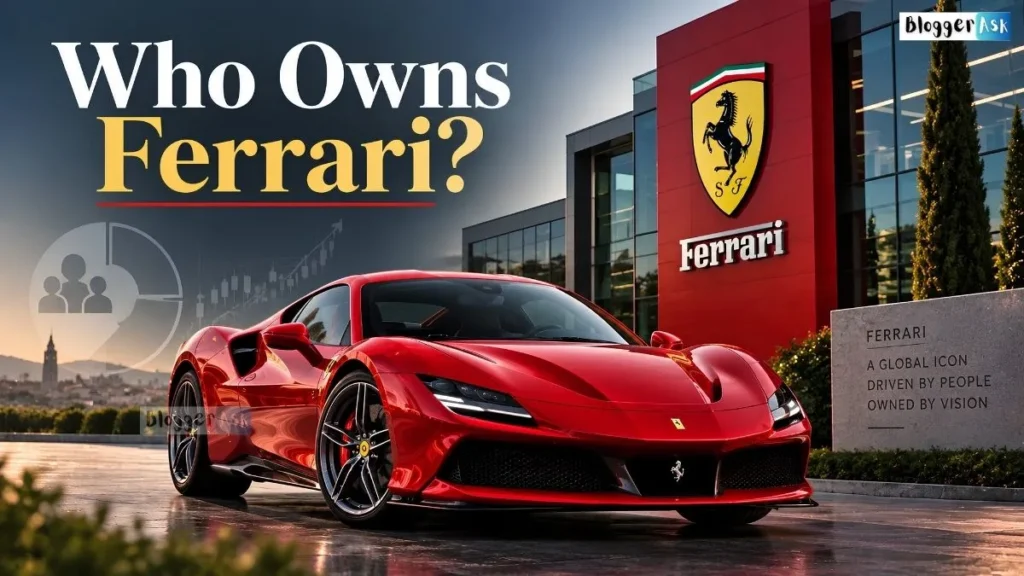
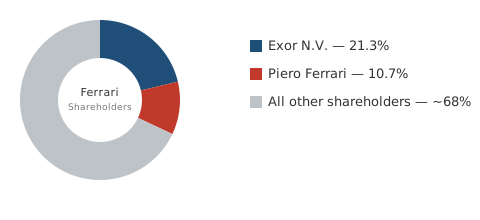
Ferrari is an independent, publicly traded company — it is not owned by Fiat, Stellantis, or Ford. According to Ferrari’s Schedule 13D/A filing with the U.S. Securities and Exchange Commission, the largest shareholder is Exor N.V., the Agnelli family’s holding company, with 21.3% of shares and about 32.3% of voting power. Piero Ferrari, the son of founder Enzo Ferrari, holds 10.7% through a family trust, carrying about 16.2% of voting power. The remainder — roughly 68% — trades publicly on the New York Stock Exchange under the ticker RACE and on Euronext Milan. (Figures as of the January 2026 SEC filing, the most recent available as of this writing.)
Key takeaways:
- No single shareholder owns a majority of Ferrari — the largest, Exor, holds just over a fifth of the shares.
- Fiat hasn’t owned Ferrari since the company’s 2015–2016 IPO and spinoff; Stellantis, formed in 2021, has never owned any part of it.
- Exor and Piero Ferrari’s combined voting power (~48.4%) comes from a loyalty voting program that rewards long-term shareholders with extra votes — not from owning a majority of shares.
- Ferrari’s CEO (Benedetto Vigna) and Chairman (John Elkann) run the company day-to-day and set strategy, which is a separate role from who owns its shares.
If you’ve ever typed “who owns Ferrari” into Google expecting the answer to be Fiat, you’re not wrong to have thought that — you’re just about a decade out of date. Fiat did own most of Ferrari for nearly 50 years. That stopped in 2015–2016. And when Fiat’s corporate successor merged into Stellantis in 2021, Ferrari didn’t go along with it. This guide breaks down exactly who owns what, how much control they actually have, and how Ferrari ended up as one of the few major carmakers with no single majority owner.
Ferrari Ownership Breakdown (Shareholders & Percentages)
Ferrari N.V. is a Dutch-registered holding company that owns Ferrari S.p.A., the Maranello-based manufacturer. It trades publicly, which means ownership is split across thousands of shareholders rather than sitting with one parent company. The most current, legally binding disclosure of who owns what comes from a Schedule 13D/A (Amendment No. 5) that Exor, Piero Ferrari, and Trust Piero Ferrari jointly filed with the SEC, reporting the position as of January 3, 2026:
| Shareholder | Equity Stake | Voting Power | Type |
|---|---|---|---|
| Exor N.V. (Agnelli family) | 21.3% | ~32.3% | Controlling shareholder |
| Piero Ferrari (via Trust Piero Ferrari) | 10.7% | ~16.2% | Founder’s family |
| All other shareholders | ~68.0% | ~51.6% | NYSE / Euronext Milan public float |
The filing separately states that, calculated on an aggregate basis, Exor and the Ferrari family together hold 56,662,908 shares — about 30.2% of shares outstanding — and roughly 48.4% of total voting power. That figure is very slightly below the simple sum of the two rows above (21.3% + 10.7% = 32.0%), a common rounding quirk in joint SEC filings where each reporting person’s individual percentage and the group’s aggregate percentage can be calculated against slightly different outstanding-share counts. Either way, the picture is consistent: no single party controls anywhere close to a majority.
Public Shareholders
The single largest category isn’t any one company or family — it’s the public float. Roughly two-thirds of Ferrari’s shares are held by ordinary investors, index funds, and institutions trading on the NYSE (RACE) and Euronext Milan. As of September 2026, Ferrari’s market capitalization stood at roughly $71 billion, making the public float alone worth tens of billions of dollars — spread across no single dominant holder.
Exor N.V. (The Agnelli Family)
Exor N.V. is a holding company controlled by Italy’s Agnelli family, the same family that built Fiat. Exor doesn’t manufacture anything itself — it’s a diversified investment vehicle that holds stakes in several companies, including Ferrari and, separately, Stellantis. Per its SEC cover-page disclosure, Exor beneficially owns 37,768,613 Ferrari common shares (21.3% of the class), and because it also holds a matching number of special voting shares through Ferrari’s loyalty voting program, its voting power runs higher, at approximately 32.3%.
Piero Ferrari and Trust Piero Ferrari
Piero Ferrari, born in 1945, is Enzo Ferrari’s only surviving son and Ferrari’s current Vice Chairman. His 18,894,295 shares (10.7% of the class) are technically held through a Jersey-based entity called Trust Piero Ferrari, with Piero holding what’s called “usufruct” — a legal right to use the shares, collect any dividends, and vote them, even though the trust holds bare legal title.
In plain terms: Piero Ferrari controls and benefits from the shares day-to-day, even though a trust technically owns them on paper. The trust has been party to the arrangement governing these shares since December 2022, when it formally adhered to the original 2016 shareholders’ agreement between Piero Ferrari and Exor. Bloomberg’s Billionaires Index profile of Piero Ferrari confirms this stake is the primary source of his personal fortune.
Ownership vs. Voting Power — Why the Numbers Don’t Match
This is the part almost every other explainer glosses over: Exor owns 21.3% of Ferrari’s shares but controls about 32.3% of the votes. Piero Ferrari owns 10.7% of shares but controls about 16.2% of the votes. That’s not a typo — it’s a deliberate mechanism called a loyalty voting program.
Here’s how it works: Ferrari rewards shareholders who hold their shares for a long, continuous period with an extra “special voting share” for every ordinary share they hold. Long-term shareholders effectively get two votes instead of one for the same stock, while short-term traders who buy and sell frequently only get one vote per share. Because Exor and Piero Ferrari have held their stakes continuously since the 2015 IPO, they qualify for the loyalty bonus — most of the public float, which turns over constantly, does not.
There’s also a regulatory detail that explains why this arrangement is even allowed to persist: under the Dutch Act on Financial Supervision, a shareholder whose voting interest exceeds 30% is normally required to make a mandatory offer to buy out all other shareholders. Because Exor individually, and Exor together with Piero Ferrari, have held a voting interest above 30% continuously since Ferrari’s shares began trading on Euronext Milan, they qualify for a specific exemption from that mandatory offer rule, according to the same SEC filing. Without that exemption, crossing the 30% voting threshold could otherwise force a full takeover bid.
Think of it as three separate questions with three separate answers:
- Who owns shares? Mostly the public (~68%), then Exor (21.3%), then Piero Ferrari (10.7%).
- Who controls votes? Exor and Piero Ferrari combined hold roughly 48.4% of voting power — nowhere near a legal majority on their own, but by far the largest coordinated voting bloc, especially since public shareholders rarely vote as a unified group.
- Who manages daily operations? Neither of them directly — that’s the CEO’s job (more on this below).
No, Ferrari Isn’t Owned by Fiat, Stellantis, or Ford
This mix-up is common enough that it’s worth addressing each version directly.
Is Ferrari Owned by Fiat?
No. Fiat S.p.A. hasn’t owned Ferrari since 2015–2016, and Fiat itself no longer exists as an independent company — it merged into Fiat Chrysler Automobiles (FCA) years earlier, and FCA itself later merged into Stellantis in 2021. Even the entity that used to own Ferrari doesn’t exist anymore in its old form.
Is Ferrari Owned by Stellantis?
No. This is the newer, more common version of the same myth. Stellantis holds zero shares in Ferrari. The confusion comes from the fact that Exor — Ferrari’s largest shareholder — also happens to hold a separate stake in Stellantis. That’s an Agnelli-family-holds-pieces-of-two-companies situation, not a Stellantis-owns-Ferrari situation. The two companies have entirely separate boards, separate management, and no ownership link to each other.
Did Ford Ever Own Ferrari?
No, but it came close. In 1963, Enzo Ferrari negotiated a potential sale to Ford Motor Company. Talks collapsed when Ferrari refused to give up control over the racing division, particularly its Le Mans program. Ford walked away and built its own GT40 racing program instead. Ferrari has never been owned by Ford at any point before or after.
How Ferrari’s Ownership Changed Over Time
1969 — Fiat Buys 50%
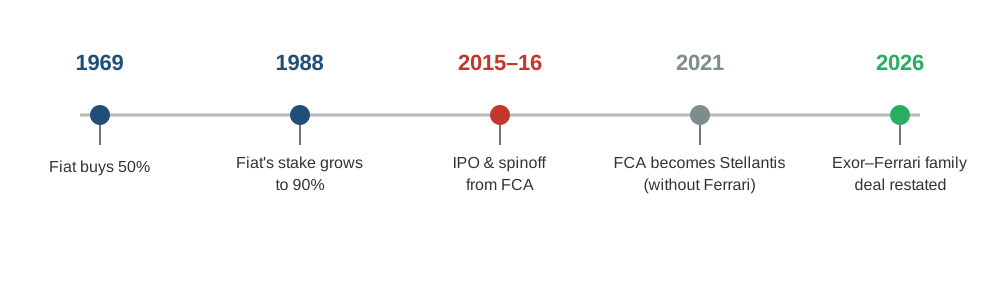
Enzo Ferrari, needing capital to keep his racing and road-car business alive, sold a 50% stake in Ferrari S.p.A. to Fiat. Enzo retained personal control over the racing division and the other half of the company.
1988 — Fiat Increases Its Stake to 90%
Over the following two decades, Fiat’s ownership grew from 50% to 90%, with Piero Ferrari retaining the remaining 10% — close to the same percentage figure that, in modified form, still roughly describes his family’s stake today. Enzo Ferrari died in 1988, the same year this stake increase was finalized.
2015–2016 — The IPO and Spinoff from Fiat Chrysler
By 2014, Fiat had merged with Chrysler to form Fiat Chrysler Automobiles (FCA), and FCA announced plans to separate Ferrari into its own independent company. On October 21, 2015, Ferrari N.V. listed on the New York Stock Exchange, with FCA selling roughly 10% of its stake through the IPO. In January 2016, FCA completed the separation by distributing its remaining shares directly to FCA’s own shareholders — which is how Exor, an FCA shareholder itself, ended up holding a direct stake in Ferrari.
Ferrari’s own 2015 SEC registration statement confirms the 90%/10% FCA–Piero Ferrari split that existed right up until the separation. Exor and Piero Ferrari signed their first shareholders’ agreement on January 3, 2016, right at the moment of separation — the same agreement that, restated and extended, still governs their relationship today.
2021 — Fiat Chrysler Becomes Stellantis (Without Ferrari)
FCA merged with the French PSA Group in January 2021 to form Stellantis. Because Ferrari had already been spun off five years earlier, it wasn’t part of this merger at all. Stellantis inherited Fiat, Chrysler, Jeep, Alfa Romeo, and other brands — but not Ferrari.
2026 — The Exor–Ferrari Family Agreement Is Restated
On January 3, 2026, Exor, Piero Ferrari, and Trust Piero Ferrari signed an Amended and Restated Shareholders’ Agreement, effective the next day, replacing the original 2016 agreement (which the Trust had already joined back in December 2022) as it approached the end of its 10-year term. According to Italian financial press reporting relayed by MarketScreener, the renegotiation followed Exor trimming part of its stake on the open market during 2025 — consistent with two additional SEC amendments filed in February and March of that year. The restated agreement runs for an initial three-year term until January 4, 2029, automatically renewing for a further three years unless either side gives at least six months’ written notice.
It carries a built-in asymmetry: Piero Ferrari alone can walk away from the agreement at his sole discretion with 30 business days’ notice, while Exor can only exit early if the Ferrari family’s voting interest falls below 5% for 30 straight days. Notably, Ferrari N.V. itself is not a party to this agreement at all — it’s a private arrangement strictly between the two shareholder camps, with no direct legal effect on how the company itself is run.
Who Runs Ferrari Day-to-Day (Leadership vs. Ownership)
Owning shares and running the company are two different jobs, and Ferrari’s structure makes that distinction unusually clear.
Benedetto Vigna, CEO
Benedetto Vigna has served as Ferrari’s Chief Executive Officer since September 2021, and remains in the role as of this writing. He came from the semiconductor industry (formerly at STMicroelectronics) rather than from the automotive world — a notable break from Ferrari’s usual executive pipeline. Vigna runs day-to-day operations, product strategy, and manufacturing decisions, and does not personally hold a controlling ownership stake in the company.
John Elkann, Chairman
John Elkann, grandson of Fiat patriarch Gianni Agnelli, is both the CEO of Exor and the Executive Chairman of Ferrari. His influence over Ferrari comes almost entirely through his leadership of Exor rather than personal shareholdings — SEC records show Elkann personally holds just 34,740 Ferrari shares in his own name, a negligible amount separate from, and far smaller than, Exor’s corporate stake. That gap is a useful illustration of the ownership-versus-control distinction: Elkann’s boardroom influence flows from the company he runs (Exor), not from shares he personally owns.
Does the Ferrari Family Still Own Ferrari?
Partially, yes. Piero Ferrari — Enzo Ferrari’s son — remains a major shareholder with 10.7% of shares and about 16.2% of voting power, and he holds the title of Vice Chairman. No other direct Ferrari descendants hold a reportable stake. So while the company isn’t “Ferrari family-owned” in the sense of majority control, it isn’t a case of the founder’s family having fully cashed out either — Piero Ferrari’s continued involvement, and his family’s restated 2026 agreement with Exor, keeps a direct link to Enzo Ferrari intact.
Is Ferrari a Public or Private Company?
Ferrari is a public company. It has traded on the New York Stock Exchange under the ticker RACE since October 2015, and simultaneously on Euronext Milan. Being public means its ownership is legally transparent and disclosed through regulatory filings — which is exactly how the percentages in this article are verifiable, rather than estimated.
Why Ferrari’s Ownership Structure Matters
Ferrari’s setup is unusual for a car company. Compare it to two other supercar brands:
- Lexus is fully owned by Toyota as a wholly-owned division — one parent company, no public shareholders, no ambiguity.
- Bugatti operates under a joint venture structure involving Porsche, Hyundai, and Rimac’s founder, with the Porsche family separately controlling a large stake — again, a clear controlling ownership group.
- Ferrari has no single majority owner at all. Its largest shareholder controls about a fifth of the equity, and control is exercised through a coordinated minority voting bloc rather than outright majority ownership.
How It Protects Brand Independence
This structure is arguably why Ferrari hasn’t been folded into a larger conglomerate’s platform-sharing strategy the way Alfa Romeo or Maserati have been. Exor and Piero Ferrari’s combined voting bloc, backed by the Dutch mandatory-offer exemption described above, is large enough to block unwanted takeovers or short-term activist pressure, without either party owning enough to unilaterally dictate every decision — such as a full production ramp-up that would dilute exclusivity, or dropping the company’s famously restrictive paint-color and resale policies.
Trade-offs of this structure, briefly:
- Benefit: Long-term strategic decisions are shielded from short-term stock-market pressure, since the controlling bloc’s loyalty shares reward patience over quick trading.
- Benefit: No single external automaker can absorb Ferrari into a shared-platform strategy against the founding family’s wishes.
- Drawback: Public shareholders, despite owning the majority of equity (~68%), hold only about half of total voting power — a governance concentration that some investors consider a risk if Exor and Piero Ferrari’s interests ever diverge from the wider shareholder base.
What Happens If Piero Ferrari Sells His Stake
Under the January 2026 agreement, Piero Ferrari can exit the arrangement entirely with 30 business days’ notice, at his sole discretion — a right Exor does not have. If he sold down significantly, Exor’s coordinated voting bloc would shrink correspondingly, since the loyalty-voting arrangement’s combined 48.4% figure depends on both parties’ holdings together. It wouldn’t hand control to any single new owner automatically — the shares would most likely disperse into the public float, similar to how Ferrari’s ownership already works for the roughly two-thirds of shares that aren’t held by Exor or the Ferrari family.
Want to check the current numbers yourself? Ferrari’s ownership disclosures are public record. You can look up the latest Schedule 13D/A filings directly on the SEC’s EDGAR database under Ferrari N.V., or check Ferrari’s own investor relations site for its most recent annual report.
The Bottom Line: Who Owns Ferrari in 2026
Ferrari is owned by its shareholders — primarily the public (~68%), Exor N.V. representing the Agnelli family (21.3%), and Piero Ferrari’s family trust (10.7%). It has not been owned by Fiat since the 2015–2016 spinoff, and it was never absorbed into Stellantis when that company formed in 2021. Control runs through a loyalty voting system rather than a single majority owner, with Exor and Piero Ferrari’s combined voting bloc — recently restated in a January 2026 agreement — remaining the most influential force in the boardroom, even though neither holds outright control on its own.
FAQs
Who is the majority shareholder of Ferrari?
No single shareholder holds a majority. Exor N.V. is the largest individual shareholder at 21.3% of shares, but that’s well short of 50%.
Who owns Ferrari stock (RACE)?
Ferrari stock is held by a mix of the Agnelli family’s Exor N.V. (21.3%), Piero Ferrari’s family trust (10.7%), and the general public through the NYSE and Euronext Milan (roughly 68%), which includes various institutional and index investors.
Who owned Ferrari before Fiat?
Before 1969, Ferrari S.p.A. was owned and controlled directly by its founder, Enzo Ferrari, who had built the company from his earlier work as a racing driver and manager for Alfa Romeo in the 1920s and 1930s.
Who is CEO of Ferrari?
Benedetto Vigna has been Ferrari’s CEO since September 2021. He’s separate from the ownership side of the business, which is led on the board by Executive Chairman John Elkann.
📖 Continue Reading:
Disclaimer
This article is for informational purposes only and does not constitute financial, investment, or legal advice. Ownership and voting percentages are based on public regulatory filings, primarily the SEC Schedule 13D/A reporting the position as of January 3, 2026, and change over time as shares are bought, sold, or reallocated. For investment decisions, consult a licensed financial advisor and verify current figures directly through SEC EDGAR or Ferrari’s official investor relations disclosures.

Alex Miller is an automotive writer and industry researcher specializing in the companies, brands, and corporate groups that shape the global automotive market. His coverage focuses on automotive ownership, parent companies, mergers and acquisitions, brand histories, executive leadership, and the business decisions behind major vehicle manufacturers.
Alex’s work spans mainstream, luxury, performance, and emerging automotive brands. He researches how automakers are structured, which companies control individual brands, how ownership has changed over time, and what those relationships mean for consumers and the wider industry. His coverage includes brands such as Jaguar, Ferrari, BMW, Volvo, Mazda, Lamborghini, Lexus, Acura, Audi, Genesis, Infiniti, Porsche, and Volkswagen.
For ownership and corporate-structure stories, Alex prioritizes primary and authoritative sources, including company filings, investor-relations publications, official corporate announcements, regulatory records, and established automotive and financial publications. This approach helps separate a brand’s public identity from its actual corporate ownership and control.
Alex combines detailed industry research with straightforward explanations designed for both automotive enthusiasts and general readers. Beyond ownership stories, his interests include automotive history, luxury and performance vehicles, electric-vehicle development, mobility companies, motorsports, and the evolving relationship between global automakers and their parent groups.