
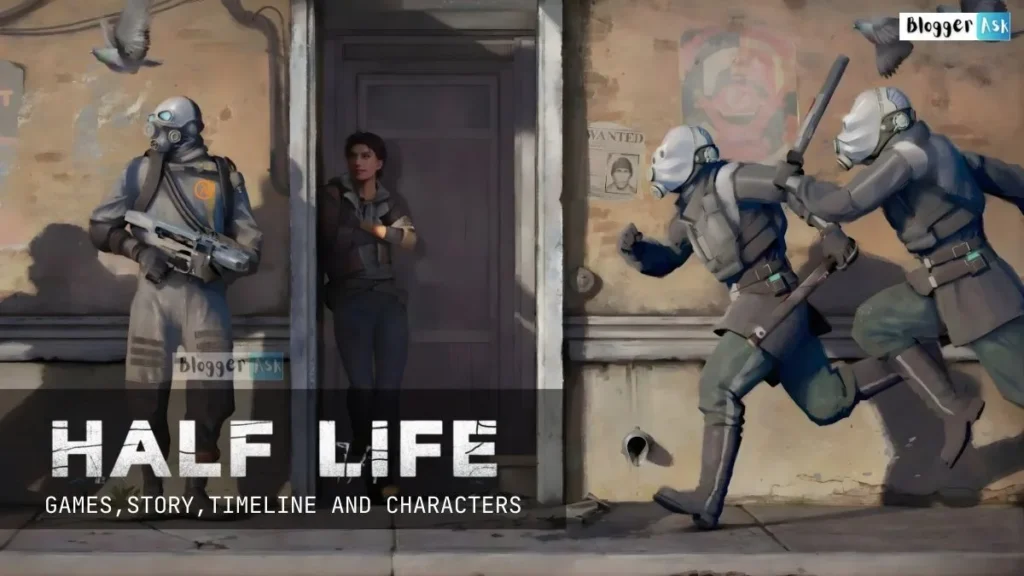
⚡ Quick Answer: Half-Life Series
The Half-Life series is a first-person shooter franchise developed by Valve Corporation, spanning 8 major titles from 1998 to 2020. It follows physicist Gordon Freeman as he battles an alien invasion and a tyrannical alien empire called the Combine. As of May 2026, the series is more relevant than ever — with Half-Life 3 widely rumored to be in advanced development and potentially tied to Valve’s upcoming Steam Machine hardware launch.
What Is the Half-Life Series? A Quick Overview
The Half-Life series is a landmark first-person shooter (FPS) franchise created by Valve Corporation. Unlike most shooters of its era — and many that followed — Half-Life tells its story entirely through gameplay, with no cutscenes pulling you away from the world. You experience everything through the eyes of the protagonist, in real time, without interruption.
The series began with a single question: what if an FPS game could make you feel like you were actually inside the story? The answer, delivered in November 1998, redefined an entire genre.
At a glance:
- Developer: Valve Corporation
- Genre: First-person shooter (single-player narrative focus)
- Total games: 8 mainline titles + expansions and ports
- Metacritic scores: Half-Life — 96/100 | Half-Life 2 — 96/100 | Half-Life: Alyx — 93/100
- Estimated total retail sales (excluding digital): Over 26 million copies across the franchise (Valve, 2008)
- Current status (May 2026): Half-Life 3 in advanced development; widely expected as a Steam Machine launch title
The Origin of Valve and How Half-Life Was Born
Two Microsoft Engineers and a Bold Bet
In 1996, Gabe Newell and Mike Harrington left their positions at Microsoft to found Valve Corporation. Both had worked on Microsoft’s Windows operating systems, but they wanted to build something different — a company focused entirely on creative game development.
The pair licensed the Quake engine from id Software, then spent two years rebuilding nearly every system from scratch. The result was GoldSrc — Valve’s own engine — which powered a game unlike anything the market had seen.
When Half-Life released on November 19, 1998, Gabe Newell had originally budgeted for around 180,000 lifetime sales. Instead, the game sold over nine million retail copies over the following decade, averaging roughly one million units per year, without even counting digital distribution through Steam.
What Made Half-Life Genuinely Different
At the time, FPS games were primarily run-and-gun experiences built around fast action and minimal story. Half-Life deliberately subverted this. The game used scripted sequences that played out around the player in real time — scientists arguing in corridors, soldiers calling out orders, equipment failing mid-operation — all while the player remained in complete control.
It was the first major FPS game to make narrative and gameplay feel inseparable. IGN called it “a tour de force in game design, the definitive single-player game in a first-person shooter.” GameSpot described it as “the closest thing to a revolutionary step the genre has ever taken.” Half-Life went on to earn a Metacritic score of 96 out of 100 and won more than 50 Game of the Year awards.
Half-Life 1 (1998): The Experiment That Changed Everything
The Setup
You are Gordon Freeman — a 27-year-old MIT graduate working as a theoretical physicist at the Black Mesa Research Facility in New Mexico. It is 8:47 AM. You are late for work.
The opening tram ride through Black Mesa is deliberate in its ordinariness. Scientists move through corridors. Machinery hums. A recorded announcement recites facility rules. Nothing about this suggests you are about to witness the most catastrophic event in human history.
Then the experiment begins. A sample of an unknown alien crystal is pushed into the Anti-Mass Spectrometer. The readings spike. The equipment overloads. Reality itself tears open — an event the game calls the Resonance Cascade.
What Happens Next
The Resonance Cascade creates an uncontrolled inter-dimensional rift, pulling alien creatures from a border world called Xen directly into Black Mesa. Scientists and security guards are killed or mutated instantly. The facility descends into chaos.
Gordon Freeman — armed with nothing but an HEV suit (a hazardous environment protection suit) and eventually a crowbar — must fight his way through aliens, then through U.S. Marines sent to eliminate all witnesses, and finally into Xen itself to close the rift.
Key Gameplay Elements That Defined the Series
- Environmental storytelling — the story is told through the world, not through cutscenes
- Physics-based puzzle solving — crates, environmental objects, and level geometry are tools
- Enemy variety — from headcrabs to HECU soldiers to alien controllers
- The HEV Suit — Gordon’s iconic orange suit became one of gaming’s most recognisable costumes
- G-Man appearances — a mysterious suited figure watches Gordon from a distance throughout the game, never interacting, always observing
Who Is G-Man?
The G-Man is one of the most discussed mysteries in gaming history. He appears throughout Half-Life 1 in the background — watching Gordon through windows, standing in areas that should be inaccessible — and says nothing. At the end of the game, he approaches Gordon and offers him a choice: work for an unnamed organisation, or face death. It is an introduction to a character whose true nature and motives remain partially unexplained across the entire series.
Half-Life Expansions: Three More Perspectives on the Same Disaster
Valve expanded Half-Life 1 through three official expansion packs, each focusing on a different character caught in the Black Mesa catastrophe. Together, they transform what was already a rich event into something with true scope.
Half-Life: Opposing Force (1999)
Protagonist: Corporal Adrian Shephard, a U.S. Marine sent to Black Mesa to eliminate survivors.
Opposing Force puts you on the other side of the conflict. The marines in Half-Life 1 were antagonists — here, you are one of them, and your mission immediately falls apart. Shephard is abandoned by his commanders, cut off from evacuation, and forced to survive alongside the very people he was sent to kill.
Opposing Force introduced several new alien species — including the Pit Drone, Voltigore, and Race X organisms — and gave players new weapons like the Barnacle grappling hook and the Displacer Cannon. It remains one of the most story-rich expansions in FPS history.
The unresolved thread: Shephard’s fate at the end of Opposing Force is deliberately left open. G-Man places him in stasis — neither freed nor eliminated. As of May 2026, Adrian Shephard’s ultimate story has never been resolved, making him one of gaming’s most famous loose ends.
Half-Life: Blue Shift (2001)
Protagonist: Barney Calhoun, a Black Mesa security guard.
Blue Shift shows the catastrophe from the perspective of a non-scientist, non-soldier — an ordinary guard who just wants to survive and help as many people escape as possible. Barney’s story is quieter and more human than Gordon’s or Shephard’s, focused on evacuation and survival rather than confrontation.
Barney Calhoun returns as a significant character in Half-Life 2, making Blue Shift valuable context for understanding his loyalty and backstory.
Half-Life: Decay (2001) — PS2 Exclusive
Protagonists: Dr. Gina Cross and Dr. Colette Green, two scientists trying to stabilise the Resonance Cascade from the inside.
Decay is the only cooperative narrative experience in the Half-Life universe, originally released as a PS2 exclusive. It places you in the facility at the moment of the cascade and asks what it was like for the people who tried to prevent the disaster rather than escape it. Decay has never received a PC port from Valve, though a fan-developed PC version exists.
Half-Life 2 (2004): A World Under Occupation
Six Years Later, Valve Changed the Game Again
When Half-Life 2 launched on November 16, 2004, it arrived alongside Steam — Valve’s digital distribution platform — and became the first major game to require online activation. That decision was controversial at the time. The game itself silenced every critic.
Half-Life 2 was built on the Source engine, which Valve developed from scratch to support a key innovation: a fully simulated physics system. Objects had real weight. Liquids behaved correctly. The famous Gravity Gun — a weapon that could pick up, manipulate, and launch objects — was built entirely around this system, and it remains one of the most creative weapons in FPS history.
Half-Life 2 sold over 6.5 million retail copies within four years of release and won 39 Game of the Year awards. Its Metacritic score of 96 matched its predecessor’s, a feat almost no sequel has replicated.
The Story: Earth Under the Combine
Twenty years have passed since the Black Mesa incident. The G-Man has kept Gordon Freeman in stasis the entire time. When the G-Man releases him, Gordon arrives by train in City 17 — a fictional Eastern European city now under the occupation of the Combine, a multidimensional empire that conquered Earth in approximately seven hours.
City 17 is oppressive by design. Propaganda plays on screens throughout the city. Citizens move through checkpoints. Combine soldiers — humans who have been physically modified and subjected to reproductive suppression — patrol every street. The Citadel, a massive alien-built tower that serves as the Combine’s regional headquarters, looms over everything.
Gordon is pulled into the human Resistance almost immediately upon arrival, reconnecting with Barney Calhoun (now working undercover as a Combine officer), Dr. Isaac Kleiner, Eli Vance, and — most importantly — Eli’s daughter, Alyx Vance.
Why Half-Life 2 Still Holds Up in 2026
- The physics system, while no longer technically groundbreaking, still enables creative gameplay that many modern games don’t match
- The world-building is dense without being expository — you understand the Combine’s horror through what you see, not through exposition dumps
- The pacing — from City 17’s streets to the canal system, Ravenholm, the coast road, Nova Prospekt, and back to the Citadel — remains a masterclass in level design
- The Gravity Gun sequence in the Citadel (when the game temporarily supercharges it) is still cited as one of gaming’s greatest moments
Alyx Vance: The Emotional Core of the Series
If Gordon Freeman is the backbone of Half-Life — the silent protagonist through whose eyes the player experiences everything — then Alyx Vance is its heart.
Alyx is the daughter of Eli Vance, a senior Black Mesa scientist who survived the Resonance Cascade and became a key figure in the human Resistance against the Combine. She is warm, technically skilled, and genuinely funny in a way that feels natural rather than scripted. She worries. She gets angry. She forms a relationship with Gordon that feels real even though Gordon never speaks a word.
Voice actress Merle Dandridge brought a depth to Alyx that was rare for any game character in 2004, and her performance holds up completely two decades later. Alyx is frequently cited in discussions of the best-written video game characters ever — not because she is a tragic figure or a power fantasy, but because she feels like a real person in an impossible situation who chooses, every day, to keep going.
Her centrality to the story became even more apparent when Valve made her the protagonist of Half-Life: Alyx in 2020.
Half-Life 2: Episode One (2006) — Escaping the Ruins
Episode One picks up immediately after Half-Life 2 ends, with Gordon and Alyx trapped inside the Citadel as it destabilises. The first episode is shorter than a full game — Valve’s stated intention was to release episodic content every six to eight months — but it is tightly constructed and introduces a new dynamic: for the first time, Alyx fights alongside you for most of the game.
The episode is primarily about survival and escape. City 17 is collapsing. The Combine are evacuating or fighting Gordon. The Vortigaunts — an alien species that fought against Gordon in Half-Life 1 and are now allied with the Resistance — play a significant role, and their relationship with both Gordon and Alyx deepens noticeably.
Episode One ends with Gordon and Alyx boarding an evacuation train as City 17 is destroyed behind them. It is a rare quiet moment in the series — two characters, momentarily safe, watching a city burn.
Half-Life 2: Episode Two (2007) — The Chapter That Still Hurts
Episode Two is widely considered the best individual chapter in the Half-Life 2 arc. It expands the scope dramatically — from the confined corridors of Episode One to open forests, underground Antlion warrens, and the White Forest research base where the Resistance is mounting its next operation.
Gordon and Alyx’s dynamic reaches its peak here. The Vortigaunts play a pivotal role in a sequence that is genuinely moving without a single word of narration. New enemies — the Hunter, a fast and aggressive Combine creature — raise the difficulty and tension significantly.
And then, in the final minutes, comes the moment that defined Half-Life’s relationship with its audience for the next seventeen years.
Without spoiling it for new players: a key character dies. It is sudden, brutal, and carries enormous emotional weight because Valve had spent two full games building the player’s attachment to this person. It is one of the most discussed moments in gaming history — not because it is gratuitously dark, but because it is earned, and because Valve never resolved it.
Episode Two ends on a cliffhanger. Episode Three was announced for release by Christmas 2007. It never came.
Half-Life: Alyx (2020) — The Series Returns
A Thirteen-Year Wait
Between Episode Two in 2007 and Half-Life: Alyx in 2020, Valve remained almost entirely silent about the Half-Life series. Games journalist Marc Laidlaw, who wrote the original Half-Life games, published a cryptic blog post in 2017 that read as a thinly veiled outline of what Episode Three’s story might have been — but it was unofficial, and Valve neither confirmed nor denied it.
When Valve announced Half-Life: Alyx in November 2019, the response from the gaming community was one of the strongest in recent memory — a combination of relief, excitement, and some anxiety, because the game was built exclusively for virtual reality.
Why Alyx Was Worth the Wait
Half-Life: Alyx is set between Half-Life 1 and Half-Life 2 — it is a prequel that follows Alyx Vance and her father Eli as they carry out an early resistance operation against the Combine. The game was designed from the ground up for VR, and it uses the medium in ways that feel essential rather than gimmicky.
- Interacting with objects — picking up items, loading weapons, manipulating the environment — has the physical weight that no controller button can fully replicate
- The horror sections (particularly the Jeff sequence, where you must avoid an enemy that cannot see but can hear everything) are among the most effective in any game in any medium
- The writing and voice performances are the strongest in the series
- The ending contains a major plot development that recontextualises key events of Half-Life 2 and opens a direct path to a continuation of Gordon Freeman’s story
Half-Life: Alyx holds a Metacritic score of 93/100 and is widely considered the benchmark VR game against which all others are measured. SteamSpy estimates between 2 and 5 million owners on Steam alone.
Valve developer Robin Walker stated after the game’s release: “We absolutely see Alyx as our return to this world, not the end of it.”
Half-Life 2 RTX & Black Mesa: The Series Gets Remastered
Half-Life 2 RTX (2023 — Ongoing)
In August 2023, Nvidia announced Half-Life 2 RTX — a full graphical overhaul of Half-Life 2 using Nvidia’s RTX Remix technology. The project is a collaboration between Nvidia and a team of experienced fan developers, adding full ray tracing, DLSS support, and rebuilt assets while keeping the original gameplay unchanged.
As of May 2026, Half-Life 2 RTX is available in an early access state, with additional levels and asset upgrades releasing progressively. It represents one of the most technically ambitious fan-developer collaborations in gaming history and has kept Half-Life 2 firmly in gaming conversations even two decades after its original release.
Black Mesa (2020)
Black Mesa is a fan-developed, Valve-approved remake of the original Half-Life 1, built in the Source engine. Development began in 2004 and culminated in a full 1.0 release in March 2020 — after sixteen years of work.
Black Mesa is not simply a graphical upgrade. It rebuilds level design, rewrites some dialogue, and completely reworks the Xen chapters — widely considered the weakest part of the original Half-Life — into something far more expansive and polished. Valve has officially acknowledged Black Mesa and sells it through Steam, a rare endorsement for a fan project.
Complete List of All Half-Life Games
| S. No. | Game | Release Year | Developer | Platform(s) | Metacritic |
|---|---|---|---|---|---|
| 1 | Half-Life | 1998 | Valve | PC, PS2 | 96/100 |
| 2 | Half-Life: Opposing Force | 1999 | Gearbox Software | PC | 84/100 |
| 3 | Half-Life: Blue Shift | 2001 | Gearbox Software | PC | 71/100 |
| 4 | Half-Life: Decay | 2001 | Gearbox Software | PS2 | N/A |
| 5 | Half-Life 2 | 2004 | Valve | PC, Xbox, PS3 | 96/100 |
| 6 | Half-Life 2: Episode One | 2006 | Valve | PC | 87/100 |
| 7 | Half-Life 2: Episode Two | 2007 | Valve | PC, Xbox 360, PS3 | 90/100 |
| 8 | Half-Life: Alyx | 2020 | Valve | PC VR | 93/100 |
Notable related releases:
- Black Mesa (2020) — Fan-developed Valve-approved remake of Half-Life 1
- Half-Life 2 RTX (2023, ongoing) — Nvidia RTX Remix graphical overhaul
- Half-Life 25th Anniversary Update (2023) — Valve restored Half-Life 1 to its original 1998 state and added new multiplayer maps, Steam Deck support, and a documentary
Key Characters: Who Drives the Half-Life Story
Gordon Freeman
The central protagonist of the main series. A theoretical physicist at Black Mesa who becomes humanity’s most unlikely — and most effective — defender. Gordon is a silent protagonist: he never speaks. This is a deliberate design choice that allows the player to project themselves completely into the role. His silence has never prevented him from becoming one of gaming’s most iconic characters.
Alyx Vance
Eli Vance’s daughter and co-protagonist of Half-Life: Alyx. She is the character who provides the series its emotional dimension — warm, competent, funny, and real in a way that many fully voiced protagonists fail to achieve. Voice actress Merle Dandridge’s performance across both Half-Life 2 and Half-Life: Alyx remains one of the finest in gaming.
G-Man
The most mysterious figure in the series. An entity who appears human but demonstrably is not — he can stop time, move between dimensions, and seems to operate on a timeline entirely separate from the events around him. He employs Gordon Freeman as an agent for reasons that have never been fully explained, and his appearances throughout the series consistently raise more questions than they answer.
Eli Vance
A senior Black Mesa scientist, Resistance leader, and Alyx’s father. Eli is one of the most genuinely warm characters in the series, and his relationship with both Alyx and Gordon gives the Resistance its emotional grounding. His fate in Episode Two is the event the series has not recovered from narratively.
Barney Calhoun
A Black Mesa security guard in Half-Life 1 and a Resistance operative working undercover in City 17 in Half-Life 2. Barney is one of the few characters to bridge both halves of the series, and his reunion with Gordon in Half-Life 2 (“I owe you a beer”) is one of the more genuinely touching moments in an FPS game.
Dr. Isaac Kleiner
The Resistance’s scientist-in-chief — eccentric, enthusiastic, and often dangerously impractical. Kleiner’s radio broadcasts throughout Half-Life 2 and Episode One provide some of the series’ most genuinely funny moments.
Vortigaunts
An alien species first encountered as enemies in Half-Life 1. By Half-Life 2, the Vortigaunts have allied with the human Resistance, and their perspective on Gordon Freeman — whom they regard as something between a saviour and a force of nature — adds unexpected philosophical depth to the series. Their energy-based biology and collective consciousness make them one of the most genuinely alien species in FPS gaming.
Adrian Shephard
Corporal Shephard is the protagonist of Opposing Force — a marine sent to silence Black Mesa who ends up fighting to survive it. His fate, left deliberately unresolved by Valve, remains one of the series’ most discussed open threads.
Half-Life 3: Everything We Know as of May 2026
This is, as of May 2026, no longer a question of if — it is a question of when.
The Evidence Is Stronger Than Ever
For years after Episode Two’s 2007 release, Half-Life 3 existed as a running joke — the most anticipated game that might never exist. That has changed significantly since 2024.
Dataminer findings: Multiple dataminers — including Tyler McVicker and Gabe Follower — have consistently found references to an internal project codenamed HLX across Valve’s existing games: Dota 2, Counter-Strike 2, and Deadlock. These references have appeared across different games and different years, indicating ongoing active development rather than abandoned code. On February 5, 2026, Gabe Follower discovered new HLX references buried in a January 2026 Deadlock update.
Insider reports: Veteran games journalist Mike Straw, citing multiple independent industry sources, has stated: “Everybody I’ve talked to are still adamant that Half-Life 3 will be a launch title with the Steam Machine. At the end of the day, the game is real. It’s just a when and not if at this point.”
Voice actor signals: Michael Shapiro — the voice of G-Man since the original Half-Life — posted a cryptic New Year’s message referencing “unexpected surprises” in the coming quarter-century, mirroring similar posts he made before Half-Life: Alyx was revealed.
The Steam Machine connection: Valve officially announced a new hardware ecosystem in November 2025: the Steam Machine (a SteamOS-powered living-room console), the Steam Frame (a VR headset), and a redesigned Steam Controller. Multiple industry sources have identified Half-Life 3 as a planned launch title for this hardware — a strategy that would mirror how Half-Life: Alyx drove adoption of the Valve Index VR headset in 2020.
Where Things Stand in May 2026
As of this writing, Valve has confirmed that the Steam Machine hardware has been delayed from its original Q1 2026 target to a broader “first half of 2026” window, citing component shortages and rapidly rising memory prices driven by AI industry demand. Whether Half-Life 3’s announcement and release follow the same timeline remains unconfirmed.
In April 2026, a new Steam app ID for a “steam_controller_unboxing_2026” video appeared in Steam’s database — interpreted by the community as a sign that a hardware (and potentially software) announcement is approaching.
Separately, game developer Hideo Kojima visited Valve’s headquarters in April 2026 and shared photos on social media, which set off a predictable wave of speculation. While Kojima’s visit has no confirmed connection to Half-Life 3, the timing fuelled community discussions that have kept the topic prominent.
What Half-Life 3 Is Rumoured to Feature
Based on leaked information reported across multiple outlets:
- Advanced physics and environmental destruction systems significantly beyond Half-Life: Alyx
- Improved NPC AI with more complex behaviour
- A single-player narrative experience continuing Gordon Freeman’s story from Episode Two’s cliffhanger
- Development has reportedly entered or passed a “content lock” phase, with team members shifting to other internal projects — a common late-stage development signal
Note: All Half-Life 3 information above is based on reported leaks and insider sources. Valve has made no official statements. Treat all of it as unconfirmed until Valve speaks.
Why Half-Life’s Legacy Refuses to Fade
The Half-Life series has not released a mainline sequel in nearly twenty years. No major gaming franchise has survived that kind of silence with its reputation not just intact but enhanced.
The reason is straightforward: the games hold up. Half-Life 1, released in 1998, received a 25th anniversary update in 2023 that brought it to 33,471 concurrent players on Steam — its highest ever recorded number. Half-Life 2, released in 2004, remains one of the most-discussed FPS games in any gaming conversation about quality and craft. Half-Life: Alyx, released in 2020, is still the definitive VR experience four years later.
The series influenced FPS game design in fundamental ways that are now so standard they go unnoticed: environmental storytelling, physics-based gameplay, AI companion design, pacing through level structure rather than cutscenes. Games from Portal to Bioshock to Titanfall carry measurable Half-Life DNA.
Half-Life does not chase its audience. It never padded content for length, never released a game to meet a financial deadline, and never compromised its design vision for a broader market. That restraint — frustrating as it has been, given thirteen-year silences and an episode that never arrived — is also precisely what makes every entry land with the weight that it does.
In May 2026, with Half-Life 3 closer to reality than it has ever been, the franchise sits at a genuinely interesting moment. The question is not whether the series will continue, but whether the next chapter will justify the wait as completely as Alyx did in 2020.
Given Valve’s track record, there is reasonable cause for optimism.
Frequently Asked Questions
What order should I play the Half-Life games in?
Play them in release order, which is also the intended narrative order for most of the series:
Half-Life (1998)
Half-Life: Opposing Force (1999) — optional but recommended
Half-Life: Blue Shift (2001) — optional but recommended
Half-Life 2 (2004)
Half-Life 2: Episode One (2006)
Half-Life 2: Episode Two (2007)
Half-Life: Alyx (2020) — set between HL1 and HL2, but designed to be experienced after HL2 for full emotional impact
Half-Life: Alyx is chronologically a prequel to Half-Life 2, but Valve designed it with knowledge of the full series in mind. Playing it after Episode Two gives the ending its maximum impact.
Do I need a VR headset to play Half-Life: Alyx?
Yes. Half-Life: Alyx was built exclusively for PC VR and cannot be played on a standard monitor without significant modding (which exists but is not officially supported). Compatible headsets include the Valve Index, Meta Quest 2/3 (via PC link), HTC Vive, and Windows Mixed Reality headsets. The game is considered the single best showcase for VR gaming available.
Is Half-Life 3 confirmed as of May 2026?
Not officially. Valve has made no public statement confirming Half-Life 3’s existence. However, the evidence from dataminers (consistent HLX references across multiple Valve games), multiple credible industry insiders, and circumstantial signals (voice actor posts, Steam database entries) makes its existence significantly more credible than at any previous point. The current leading theory, supported by multiple sources, is that Half-Life 3 is intended as a launch title for the Steam Machine console in 2026.
What happened to Half-Life 2: Episode Three?
Episode Three was originally announced for release by Christmas 2007. It was never released. Valve quietly cancelled the episodic model in favour of developing a full sequel — which became the long-rumoured Half-Life 3. In 2017, former Valve writer Marc Laidlaw published a fictional story (later confirmed to be a thinly veiled summary of Episode Three’s planned plot) on his personal blog. Valve neither confirmed nor denied the content of that post. The story is widely discussed in the Half-Life community and is worth reading if you want a sense of where the series was heading.
What is Black Mesa, and is it worth playing?
Black Mesa is a full fan-developed remake of the original Half-Life 1, built in the Source engine and officially approved by Valve. After sixteen years of development, it released in March 2020. It is sold on Steam and is considered by many players — including long-time Half-Life fans — to be the definitive way to experience the original game in 2026. The Xen chapters in particular are dramatically expanded and improved compared to the 1998 original. If you want to play Half-Life 1 for the first time, Black Mesa is the recommended starting point.
Who is G-Man, and is his identity ever explained?
The G-Man’s exact identity and employer have never been officially explained. What the games establish: he is not human (or not entirely human), he can manipulate time and dimensional space, he employs Gordon Freeman as an agent for an unnamed organisation, and his interest in key events — including the Black Mesa incident — predates the games themselves. Half-Life: Alyx reveals that the G-Man has a complex relationship with Alyx Vance that goes further than previously understood. His full nature remains one of gaming’s most celebrated mysteries.
How does Half-Life: Alyx connect to the main series story?
Half-Life: Alyx is set between the events of Half-Life 1 and Half-Life 2 — years before Gordon Freeman arrives in City 17. It follows Alyx Vance and her father Eli on a Resistance operation against the Combine. Without spoiling the ending: the game contains a significant plot development involving the G-Man that directly impacts the timeline established by Half-Life 2 and the Episodes. The ending of Half-Life: Alyx is the narrative thread most likely to be picked up by Half-Life 3.
Conclusion
The Half-Life series is, above almost everything else in gaming, a study in patience — both Valve’s patience in building games only when they have something genuinely new to offer, and the player community’s extraordinary patience in waiting for answers that have taken, in some cases, nearly two decades to approach.
What makes the wait bearable is the quality of what already exists. Half-Life 1 remains a masterclass in first-person game design. Half-Life 2 remains one of the finest action games ever made. Half-Life: Alyx is not just the best VR game available — it is one of the best games Valve has ever made, full stop.
In May 2026, the series sits at what feels like a genuine inflection point. The evidence for Half-Life 3 is more concrete than it has ever been. The Steam Machine represents a hardware ecosystem that makes strategic sense as a launchpad. The community is more engaged than it has been since 2007.
Whether Half-Life 3 arrives in 2026 or later, the series has already secured its place in the history of the medium. It changed what games could be in 1998, changed them again in 2004, and changed them again — for VR — in 2020.
If history is any guide, the next entry will be worth whatever the wait turns out to be.
Sources: Wikipedia (Half-Life series), Metacritic, SteamSpy, Game Informer/Gamasutra sales data (2008), Insider Gaming, TweakTown, Technobezz, GameRant, The Gamer, Engadget, TechPowerUp, Screen Rant.

Alex Miller is a passionate gaming writer with 8+ years of experience covering FPS, RPG & AAA titles. From Half-Life to Call of Duty, Alex breaks down complex game worlds into guides every gamer loves.