⚡ Quick Answer: Who Owns Alphabet Inc.?
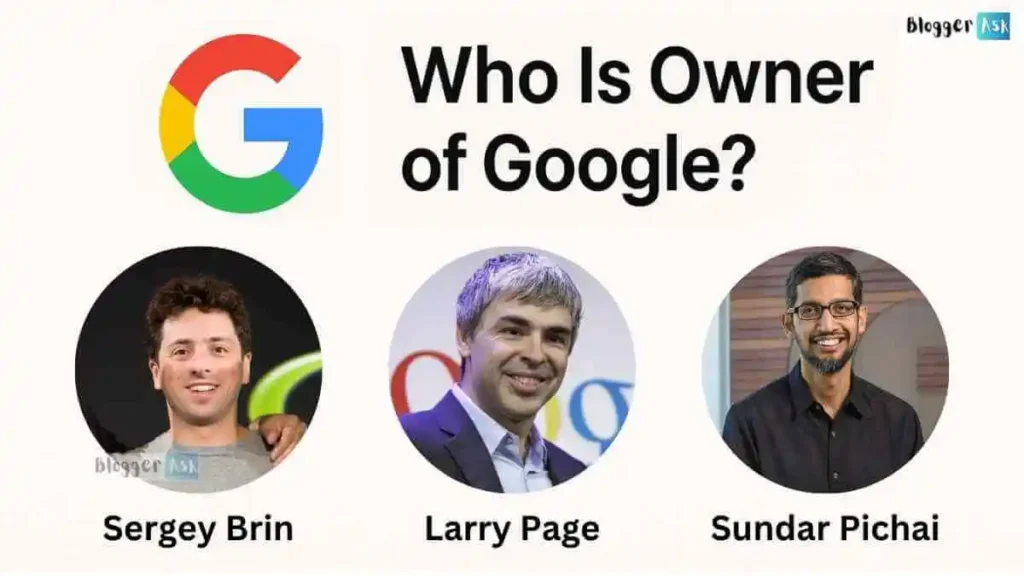
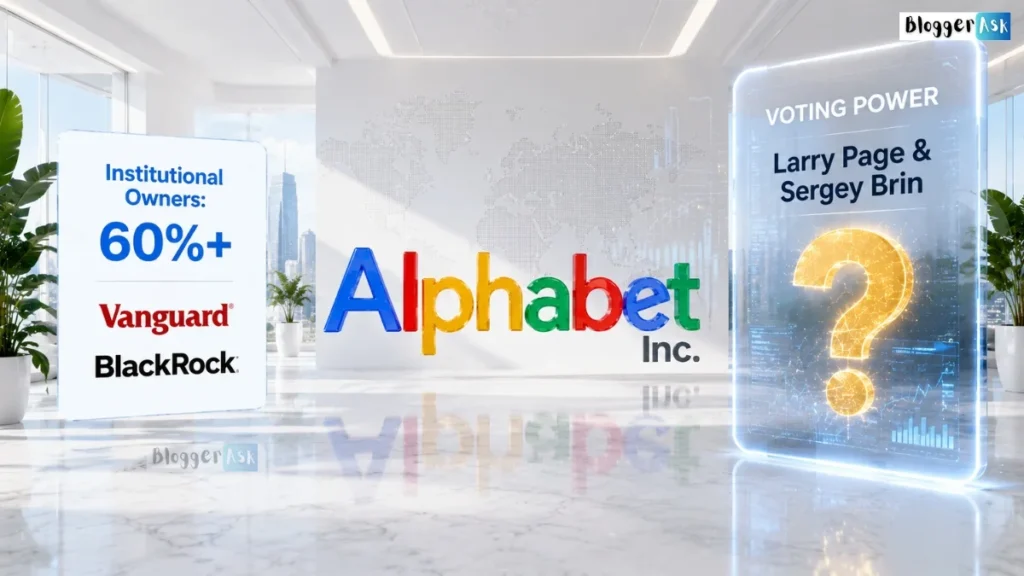
Alphabet Inc. is publicly owned through shares traded on Nasdaq under GOOGL and GOOG. However, co-founders Larry Page and Sergey Brin retain majority voting control — 27.4% and 25.3% respectively — through non-tradeable Class B super-voting shares, giving them a combined 52.7% voting authority over all major company decisions.
Introduction
Owning a piece of Google is easy — you just buy a share. But the company you’re actually buying into is Alphabet Inc., the holding company built in 2015 to sit above Google and everything else the founders were building. Understanding who owns Alphabet means understanding that structure: how it was designed, who holds which class of shares, and where the real decision-making power sits.
Here’s the short version. Alphabet is publicly traded — millions of shareholders worldwide own its stock, and index funds like Vanguard and BlackRock hold the largest economic stakes. But the company was deliberately engineered so that public ownership and actual control are two separate things. Per Alphabet’s April 2026 DEF 14A proxy statement filed with the U.S. Securities and Exchange Commission, co-founders Larry Page and Sergey Brin hold 27.4% and 25.3% of all votes respectively — a combined 52.7% majority — through a special class of super-voting shares that never trades on the open market.
So the honest answer has two layers: the public owns most of Alphabet’s shares, but Page and Brin own most of its votes. This guide breaks down exactly how that works — the three share classes, the institutional shareholders, and what it all means if you’re buying the stock.
Alphabet Ownership Snapshot
| Holder | Economic Stake | Voting Power |
|---|---|---|
| Larry Page | ~3.5% | 27.4% |
| Sergey Brin | ~3.2% | 25.3% |
| Vanguard Group | ~7% | ~3.5% |
| BlackRock | ~6.2% | ~2.5% |
| Sundar Pichai | Below 1% | Below 1% |
| Public investors | Majority of shares | ~36% combined |
Source: Alphabet Inc. DEF 14A Proxy Statement filed with the SEC, April 2026 (data as of April 6, 2026). Note: institutional voting power is far below economic stake because Vanguard and BlackRock hold Class A and Class C shares — not the founders’ 10-vote Class B.
What Is Alphabet Inc. — and Is It the Same as Google?
Alphabet Inc. is a Delaware-incorporated holding company and the legal parent of Google. It was created in October 2015 as part of a deliberate restructuring designed to separate Google’s core internet business from its longer-horizon ventures.
By 2015, Google had grown far beyond search. It owned YouTube, Android, Gmail, Google Maps, and a growing roster of moonshot projects — self-driving cars, life sciences, drone delivery — that had little to do with advertising revenue. Grouping all of it under the “Google” brand made it nearly impossible for investors to understand what they were actually valuing.
Alphabet solved this cleanly. Google LLC became the subsidiary responsible for Search, YouTube, Android, Google Cloud, Gmail, Chrome, and advertising. Everything else — the longer-term bets — got grouped under “Other Bets” with separate financial reporting. Investors could finally see Google’s core performance on its own.
What didn’t change was the control structure. Page and Brin kept every voting share they held before the restructuring. The corporate architecture changed. The power map did not.
So: Alphabet owns Google, not the other way around. When you buy GOOGL or GOOG stock, you’re buying a share in Alphabet Inc. Google LLC has no independent stock listing — it’s a wholly-owned subsidiary. In everyday conversation the names get used interchangeably, which makes sense given Google accounts for roughly 95% of Alphabet’s revenue. But legally, they are separate entities.
| Detail | Information |
|---|---|
| Founded | October 2, 2015 |
| Founders | Larry Page, Sergey Brin |
| CEO | Sundar Pichai |
| Headquarters | Mountain View, California |
| Stock Symbols | GOOGL (Class A), GOOG (Class C) |
| Exchange | Nasdaq |
| Market Cap | ~$4.0 trillion (late July 2026) |
| Annual Revenue | ~$402.8 billion (FY2025) |
Who Actually Owns Alphabet?
What is Alphabet’s ownership structure? Alphabet has three types of shareholders: founders who hold voting control, institutional investors who hold large economic stakes with limited voting power, and public shareholders who own the majority of shares but a minority of votes.
Alphabet’s ownership splits into three distinct groups:
The founders — Larry Page and Sergey Brin — hold Class B shares carrying 10 votes each. According to Alphabet’s April 2026 DEF 14A proxy statement, Page holds 27.4% of all votes and Brin holds 25.3%. Combined: 52.7% — an outright majority sufficient to approve or block any vote, on any topic, at any time.
Institutional investors hold the largest economic stakes. Vanguard Group owns approximately 7% of total Alphabet shares. BlackRock owns roughly 6.2%. Fidelity and State Street each hold positions typically ranging between 2–4%, primarily through index and ETF products. Their financial stake is enormous. Their governance influence is minimal — their shares are Class A or Class C, not Class B.
Public shareholders — millions of retail and institutional investors worldwide — own the rest through GOOGL and GOOG on Nasdaq. They participate fully in Alphabet’s financial performance. They have virtually no say in how the company is governed.
Owning Alphabet shares and controlling Alphabet are not the same thing. That single sentence explains everything that follows.
Alphabet’s Share Structure — The Key to Everything
This is the most important section for understanding who controls Alphabet. Most public companies have one type of share: one share, one vote. Alphabet has three classes — and they are not remotely equal.
Class A Shares — Ticker: GOOGL. Standard public shares. One vote per share. Available through any brokerage. Approximately 5.82 billion shares outstanding as of April 2026.
Class B Shares — Not publicly traded. Ten votes per share. Not listed on any exchange. Cannot be purchased at any price. Held exclusively by founders and a small number of early insiders. Larry Page holds approximately 389 million; Sergey Brin holds approximately 359 million. Together they control nearly 90% of all Class B shares outstanding.
Class C Shares — Ticker: GOOG. Zero votes per share. Full economic rights — holders benefit when Alphabet’s stock rises — but no governance rights whatsoever.
| Share Class | Ticker | Votes Per Share | Who Holds It |
|---|---|---|---|
| Class A | GOOGL | 1 vote | Public investors |
| Class B | Not traded | 10 votes | Page, Brin, early insiders |
| Class C | GOOG | 0 votes | Public investors, employees |
This structure was not invented for Alphabet. It was built into Google’s original 2004 IPO prospectus — a deliberate choice by Page and Brin to access public capital without surrendering strategic control to it. It has never been modified.
GOOG vs GOOGL — What’s the Actual Difference?
What is the difference between GOOG and GOOGL? GOOGL is Alphabet’s Class A shares — each carries one vote. GOOG is Alphabet’s Class C shares — each carries zero votes. Both trade on Nasdaq and provide identical economic exposure to Alphabet’s performance.
| Feature | GOOGL (Class A) | GOOG (Class C) |
|---|---|---|
| Votes per share | 1 vote | 0 votes |
| Economic rights | Yes | Yes |
| Governance influence | Minimal | None |
| Best for | Investors wanting any vote | Pure economic exposure |
For most retail investors, the difference is nearly academic. Neither GOOG nor GOOGL gives meaningful ability to influence Alphabet’s direction — the founders’ Class B majority makes that mathematically impossible regardless of how much Class A stock you accumulate. But if voting participation matters to you at all, GOOGL is the correct choice. GOOG gives you zero votes by design.
For a full breakdown of Alphabet’s share classes from an investor perspective — including the 2022 stock split history and what changed for retail buyers — see our detailed guide on Google stock and the difference between GOOG and GOOGL shares.
How Much Control Do Page and Brin Actually Have?
In December 2019, both founders stepped down from executive roles — Page as CEO of Alphabet, Brin as President. Sundar Pichai assumed full operational authority over both Google and Alphabet. Many people read that as a power transition.
At the ownership level, it wasn’t.
Page and Brin kept every single Class B share. Their combined 52.7% voting majority remained completely intact. Operational authority changed hands. Governance authority did not.
What that means in practice:
- They can approve or block any major acquisition
- They control board composition — and therefore who the CEO is
- They can override institutional investor opposition on any shareholder vote
- They can replace Sundar Pichai without input from any other shareholder
This mirrors how Mark Zuckerberg maintains control of Meta — founder-controlled super-voting shares that preserve long-term strategic authority regardless of what public shareholders prefer. The founders’ argument has always been consistent: patient, long-term ownership produces better outcomes than quarterly earnings pressure from Wall Street.
Largest Institutional Shareholders
While founders control the votes, the largest economic stakes belong to passive index funds that hold shares in virtually every major public company.
Vanguard Group holds approximately 7% of total shares, primarily through index fund products. BlackRock holds approximately 6.2% through iShares ETFs. Fidelity and State Street each hold positions typically ranging between 2–4%, through a mix of active and passive products.
These institutions regularly engage with company management on governance practices, executive pay, and ESG reporting. But when votes are counted, their Class A shares are outnumbered by the founders’ Class B super-voting stakes. Per Alphabet’s proxy filings, public investors collectively hold approximately 36% of total voting power — less than the founders’ combined 52.7% alone.
Why This Ownership Structure Matters to Investors
Most public companies have straightforward governance: shareholders vote, majority wins, management is accountable. Alphabet breaks that model in several ways that matter if you’re buying GOOGL or GOOG.
No removal mechanism. If Alphabet’s leadership made decisions that destroyed shareholder value, public shareholders couldn’t vote them out. The founders would need to agree to any change in direction.
Founder stability cuts both ways. The same structure that insulates Google from activist investors also allowed long-term bets — Waymo, Google DeepMind, Gemini AI — to be funded without quarterly earnings pressure. That insulation has arguably produced better long-term outcomes than a more accountable structure might have. It has also let management raise 2026 capital-spending guidance to $195–205 billion and keep funding AI infrastructure even as free cash flow turned negative in Q2 — decisions a more shareholder-accountable board might have resisted.
The Class B sunset question. Under Alphabet’s corporate charter, Class B shares automatically convert to Class A shares if transferred to an unapproved party — which includes most heirs. If both founders died and their shares converted, voting control of Alphabet would revert to public shareholders for the first time since 2004. No succession plan has been publicly disclosed.
Index inclusion locked in. In 2017, S&P 500 and FTSE Russell changed rules to limit new multi-class share companies from index inclusion. Alphabet was already included before those changes — facing no pressure that might otherwise incentivize governance reform.
Proxy advisory firms including ISS and Glass Lewis have repeatedly flagged Alphabet’s dual-class structure as a governance concern in annual governance reviews. Both sides of the argument have real merit. Neither should be ignored.
What Companies Does Alphabet Own?
What does Alphabet own? Alphabet owns Google LLC — which runs Search, YouTube, Android, Google Cloud, and Gemini — plus a portfolio of “Other Bets” like Waymo, Verily, and Wing.
Under Google LLC: Search, YouTube (acquired 2006), Android (2005), Google Cloud, Gmail, Maps, Chrome, Google Ads, Gemini AI, and Google DeepMind.
Other Bets: Waymo (self-driving), Verily (life sciences), and Wing (drone delivery).
The detailed revenue figures, valuations, and full acquisition history live in our dedicated guide to the companies owned by Google.
Can the Public Buy Alphabet Shares?
Yes — through any standard brokerage account globally. Alphabet trades on Nasdaq under GOOGL and GOOG, with full financial disclosures available through Alphabet’s official investor relations page.
Following a 20-for-1 stock split in July 2022, the per-share price dropped from roughly $2,200 to approximately $110, making individual share purchases practical for retail investors without fractional share programs.
What retail investors cannot buy, at any price, are Class B shares. Those are not listed on any exchange. The dual-class structure is permanent unless the founders choose to change it — and there is no public indication that either Page or Brin intends to do so.
Frequently Asked Questions
Who owns most of Alphabet?
By economic value, Vanguard (~7%) and BlackRock (~6.2%) hold the largest stakes. By voting power, Larry Page (27.4%) and Sergey Brin (25.3%) hold majority control through non-tradeable Class B super-voting shares, per Alphabet’s April 2026 SEC proxy filing.
Does Google own Alphabet?
No — it’s the reverse. Alphabet Inc. owns Google LLC as a wholly-owned subsidiary. Alphabet is the parent company; Google is its primary operating business.
Is Alphabet privately owned?
No. Alphabet is publicly traded on Nasdaq under GOOGL and GOOG with millions of shareholders worldwide. However, its voting control structure means the founders retain majority governance authority despite public trading.
Why do founders still control Alphabet despite stepping back in 2019?
Because control at Alphabet is determined by voting shares, not executive titles. Page and Brin held Class B shares worth 10 votes each and retained all of them when stepping down. Operational authority went to Sundar Pichai. Voting power did not.
What’s the difference between GOOG and GOOGL?
GOOGL is Class A — one vote per share. GOOG is Class C — zero votes. Both provide identical economic exposure to Alphabet’s performance. GOOGL is the correct choice for any investor who wants voting rights, however limited in practice.
Who are Alphabet’s largest institutional investors?
Vanguard Group (~7%), BlackRock (~6.2%), Fidelity, and State Street are the largest, primarily through passive index fund and ETF products.
The Bottom Line
Alphabet may be publicly traded — but it was engineered from the beginning to remain founder-directed. That structure has survived leadership transitions, trillion-dollar valuation growth, antitrust scrutiny, and two decades of public ownership. There is little sign it will change anytime soon.
Larry Page and Sergey Brin built something genuinely unusual: a company that raised hundreds of billions from public markets while ensuring those markets would never actually direct its strategy. Their combined 52.7% voting majority — confirmed in Alphabet’s April 2026 SEC proxy filing — means that Sundar Pichai, Vanguard, BlackRock, and every other stakeholder operates within a framework the founders control.
Owning Alphabet shares means participating in the financial performance of one of the most dominant businesses ever built. It does not mean having a say in how that business is run. Understanding both halves of that sentence is what it really means to understand who owns Alphabet Inc.
📖 Continue Reading:
- Who Owns Google?
- Who Founded Google?
- Who Is the CEO of Google?
- How Does Google Make Money?
- Who Owns Tesla?
- Who Owns SpaceX?
Sources & References
- Alphabet Inc. DEF 14A Proxy Statement (April 2026) — SEC EDGAR (founders’ 52.7% combined voting power; Page 27.4%, Brin 25.3%; share-class detail)
- Alphabet Inc. Form 10-K, FY2025 — SEC EDGAR (total revenue $402.8 billion)
- Alphabet Q2 2026 Earnings Release — SEC EDGAR (Google Cloud $24.8B, capex guidance, free cash flow)
- Alphabet Investor Relations — abc.xyz
- 13F institutional holdings filings — SEC EDGAR (Vanguard, BlackRock, Fidelity, State Street)
- Waymo expansion and ridership coverage — Yahoo Finance / CNBC (2026)

Olivia Isabel is a Business & Technology Writer specializing in corporate ownership, company leadership, shareholders, acquisitions, and the business strategies behind major global companies. Her work covers technology, artificial intelligence, social media, finance, e-commerce, automotive, and consumer technology, with a particular focus on explaining who owns, controls, and leads well-known companies.
With a background in Economics and Journalism, Olivia approaches each topic as a research-driven business story. She examines company filings, investor-relations materials, regulatory records, official corporate announcements, and reputable financial sources to distinguish between legal ownership, economic ownership, voting control, and day-to-day management.
Her articles explore the founders behind major companies, current CEOs, significant shareholders, parent companies, subsidiaries, acquisitions, and changes in corporate structure. She has written about companies including Google, Alphabet, Apple, Microsoft, Amazon, Meta, OpenAI, Tesla, SpaceX, YouTube, Instagram, TikTok, WhatsApp, Reddit, Spotify, and other major technology and consumer brands.
Olivia’s goal is to make complicated corporate and financial information clear, accurate, and useful for everyday readers. She is particularly interested in corporate strategy, technology business models, entrepreneurship, emerging AI companies, public markets, and the evolution of globally recognized brands.