🔍 Disclosure: I tested every recipe 3–4 times in my own kitchen. No sponsorships. No AI-generated recipes.
Three years ago, I dealt with constant bloating after every meal. My doctor said my gut microbiome needed attention and suggested fermented foods. I ignored her for four months — then bought a bottle of store-bought kombucha out of desperation.
Two weeks later, the bloating was noticeably better. I Googled “how to make kombucha at home” and never looked back.
Here’s the simple science: fermentation is a natural process where bacteria and yeasts break down sugars, producing live microorganisms called probiotics. These probiotics support your gut microbiome — the trillions of microbes in your digestive tract that influence your digestion, immunity, and overall health. Making homemade fermented drinks regularly introduces beneficial new microbes into that system — and it’s far easier than most people think.
I’m not a doctor or nutritionist. I’m a home cook who has spent three years testing, failing, and succeeding with fermentation. Everything here comes from real experience.
Here are 7 easy gut-healthy fermented drinks I personally tested — with exact recipes, taste-test results, and safety tips.
Quick Gut-Health Science
The live bacteria and yeasts in fermented drinks for gut health — probiotics — interact positively with your existing gut microbiome. A landmark 2021 Cell study found a high-fermented-food diet significantly increased microbiome diversity and reduced inflammation markers in participants.
According to sources like Mayo Clinic and published research on PubMed, probiotic-rich foods can support digestive health and may help reduce inflammation markers.
Making natural probiotic drinks at home gives you something store-bought versions often can’t: live, unpasteurised cultures at a fraction of the cost. That said, no fermented drink is a cure for any condition. Individual responses vary, and research is still evolving.
⚠️ These drinks support gut health as part of a balanced diet — not as a cure. Consult your doctor if you have a digestive condition, are immunocompromised, or are pregnant.
Trusted sources:
- Mayo Clinic — Probiotics
- PubMed — High-Fermented Food Diet, Cell (2021)
- PubMed — Gut Microbiota & Fermented Foods (2020)
- NHS — Foods for Digestive Health
- WebMD — What are Probiotics?
- PubMed — Kombucha Review (2016)
- PubMed — Water Kefir & Beneficial Bacteria (2020)
- Healthline — Fermented Foods & Health
7 Fermented Drinks for Gut Health (Easy Recipes)
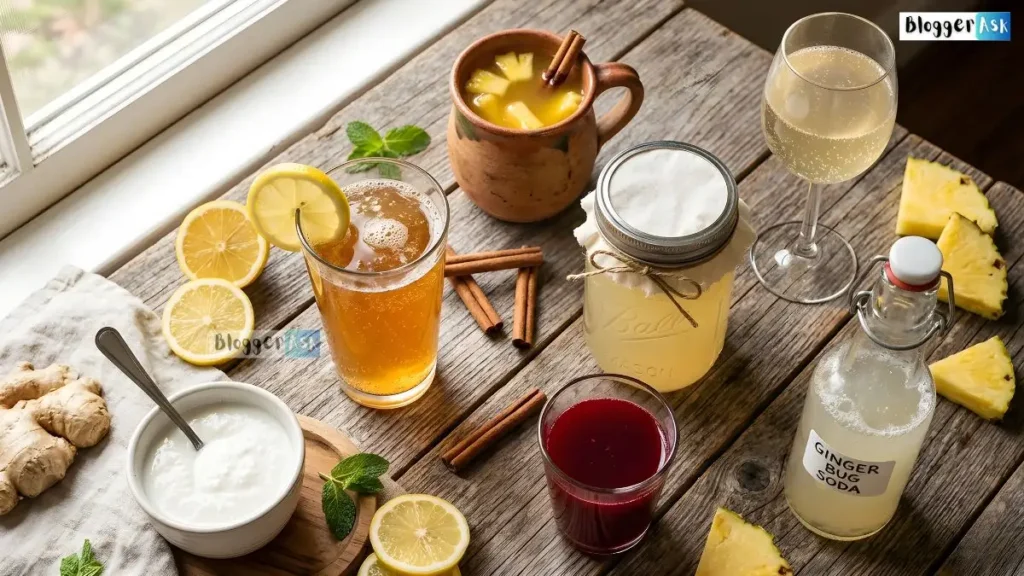
These 7 DIY fermented beverages range from beginner-ready to slightly advanced — there’s something here for every experience level.
Classic Homemade Kombucha – Fizzy & Gut-Loving
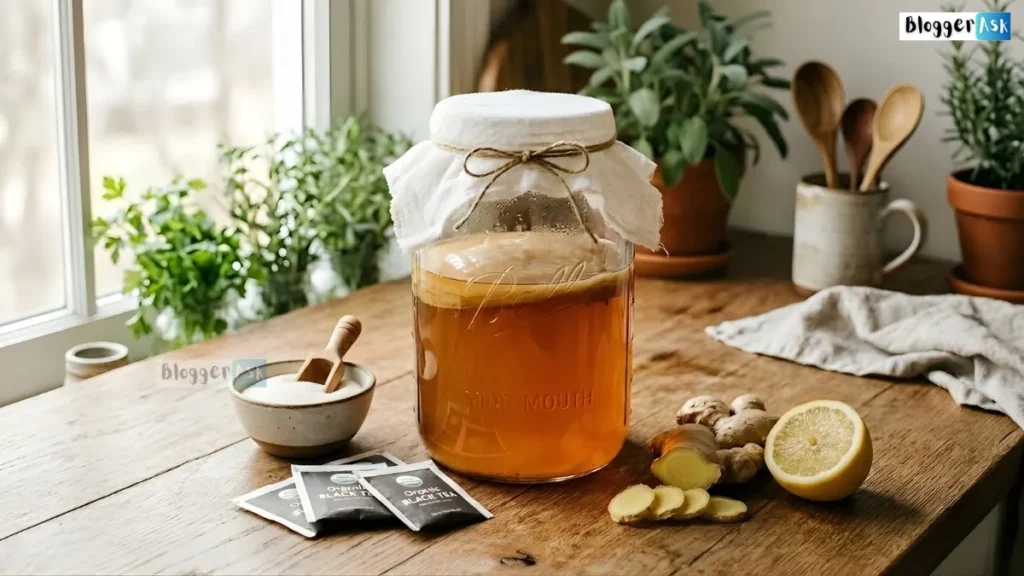
✍️ This easy homemade kombucha recipe was my gateway ferment. My first batch was too vinegary — 14 days in a warm kitchen. By batch three I had it perfect: lightly tart, subtly sweet, gently fizzy.

Ingredients: 1L filtered water · 2 plain black tea bags · 80g white sugar · 1 SCOBY · 100ml starter liquid
Instructions:
- I brew the tea, dissolve the sugar in it, then cool completely to room temperature.
- I pour into a clean jar, add starter liquid, and gently place the SCOBY on top.
- I cover with cloth, keep at 24–28°C (75–82°F) in a dark spot for 7–10 days, tasting from day 7.
- Once pleasantly tangy, I bottle it for second fermentation with fruit for 2–3 days.
⏱ 7–14 days | 📊 Beginner–Intermediate | 💰 ~$1.50–$2.50/litre
Flavour ideas: Ginger + Lemon · Strawberry + Basil · Pineapple + Turmeric
🧪 Taste test: Lightly tart, gently fizzy. Ginger-lemon second ferment is exceptional — better than anything store-bought.
⚠️ Safety: Never add SCOBY to hot liquid. Discard if you see fuzzy green, black, or pink mould. Contains trace alcohol (0.5–3%).
Water Kefir – Light, Dairy-Free & Beginner-Friendly
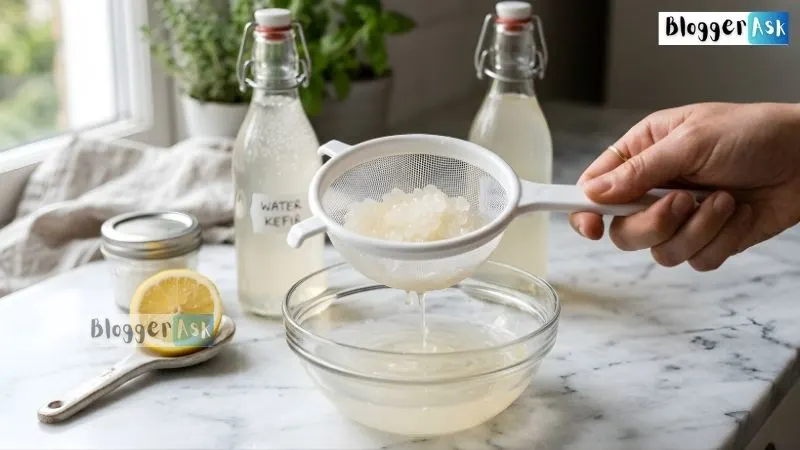
✍️ This water kefir recipe is my top recommendation for anyone new to making probiotic drinks at home. Ready in 24–48 hours, incredibly forgiving, and the base takes on any fruit flavour beautifully.
Ingredients: 1L filtered water · 60g white sugar · 3–4 tbsp water kefir grains · 2 dried figs · squeeze of lemon
Instructions:
- I dissolve sugar in water, add dried figs and lemon, then drop in the grains.
- I cover with cloth and leave at 22–26°C (72–79°F) for 24–48 hours.
- I strain through a plastic sieve, bottle the liquid, and second-ferment with fruit for fizz.
⏱ 24–48 hours | 📊 Beginner | 💰 ~$0.80–$1.20/litre
Flavour ideas: Lemon + Mint · Mango + Cardamom · Blueberry + Ginger
🧪 Taste test: Mild, lightly sweet, barely acidic. The mango-cardamom version won over every sceptic I’ve served it to.
⚠️ Safety: Never use metal sieves — they damage the grains. Don’t leave beyond 72 hours at room temperature.
Jun Tea – Floral, Honey-Sweetened Kombucha
✍️ Made with green tea and raw honey, this is lighter and more delicate than regular kombucha. Trickier, but stunning when it works.

Ingredients: 1L filtered water · 4g plain green tea · 60g raw (unpasteurised) honey · 1 Jun SCOBY + 100ml Jun starter
Instructions:
- I brew green tea at 75–80°C (not boiling), then cool below 35°C before adding honey.
- I add starter liquid and SCOBY, then ferment at 20–24°C (68–75°F) for 7–10 days.
- I taste from day 7 — ready when gently tart and floral.
⏱ 7–10 days | 📊 Intermediate | 💰 ~$3.00–$4.00/litre
Flavour ideas: Rose + Hibiscus · Peach + Lavender · Jasmine + Ginger
🧪 Taste test: Silky, floral, with a lingering honey aftertaste. The rose-hibiscus second ferment is breathtaking.
⚠️ Safety: Never use pasteurised honey — it stops fermentation. Do not give to infants under 1 year.
Beet Kvass – Earthy, Tangy & Surprisingly Addictive
✍️ I expected to hate this. I didn’t. A small glass before dinner for two weeks made a noticeable difference to my digestion personally.
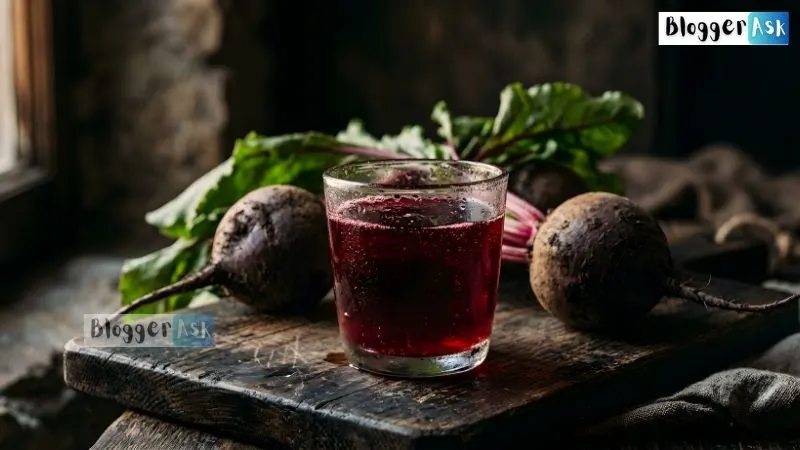
Ingredients: 2 medium beetroots (300g), cubed · 1L filtered water · 10g non-iodised salt · optional: garlic, peppercorns
Instructions:
- I dissolve salt in water, pack beet cubes into a jar, and pour brine over — beets must be fully submerged.
- I weigh them down with a water-filled bag and ferment loosely covered for 2–3 days (summer) or 4–5 days (winter).
- Once sour and earthy, I strain and refrigerate.
⏱ 2–5 days | 📊 Beginner | 💰 ~$1.00–$1.50/litre
Variations: Garlic + Dill · Beet + Apple + Ginger
🧪 Taste test: Deep, earthy, tartly complex. 60–80ml as a pre-dinner shot is my routine.
⚠️ Safety: Always keep beets submerged. Skim white Kahm yeast film if it appears. Fuzzy coloured mould = discard. Consult a doctor if prone to kidney stones.
Tepache – Mexican Fermented Pineapple (My Crowd-Pleaser)
✍️ Uses the peel and core you’d normally throw away. The easiest of all these DIY fermented beverages, and the one guests always ask about.

Ingredients: Peel + core of 1 pineapple · 1.5L filtered water · 100g raw sugar · 1 cinnamon stick · 3–4 cloves
Instructions:
- I dissolve sugar in water, add pineapple peel, core, and spices to a large jar.
- I cover with cloth and ferment at room temperature for 48 hours, watching for bubbles.
- I strain, bottle, and refrigerate after a maximum 12-hour sealed second ferment in warm weather.
⏱ 2–3 days | 📊 Beginner | 💰 ~$0.60–$1.00/litre
Variations: Tepache + Chilli Salt Rim · Tepache + Light Beer · Pineapple + Coconut
🧪 Taste test: Tropical, warm, gently spiced. A New York summer kitchen moves fermentation fast — I learned the hard way when a sealed bottle sprayed my ceiling. Twelve hours maximum for second ferment in warm weather.
⚠️ Safety: Fermentation speeds up significantly in warm weather — burp bottles daily and open slowly over a sink.
Ginger Bug Soda – Real Probiotic Ginger Ale from Scratch
✍️ A living starter you maintain and reuse indefinitely. The resulting ginger ale is bold, spicy, and nothing like anything from a bottle.
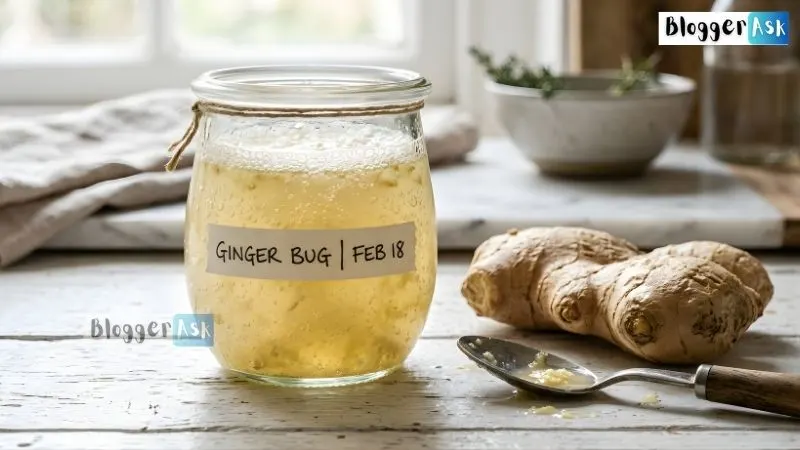
Ingredients — Bug: 250ml filtered water · 2 tsp grated fresh ginger (skin on) · 2 tsp sugar, fed daily for 5 days
Ingredients — Soda: 1L water · 60g sugar · 30g sliced ginger · juice of 1 lemon · 60ml active bug liquid
Instructions:
- I build the bug over 5 days by adding 1 tsp ginger + 1 tsp sugar daily until visibly bubbly.
- I simmer water, sugar, and ginger into a syrup, cool fully, then mix in lemon and strained bug liquid.
- I bottle and leave 2–3 days at room temperature, burping daily, then refrigerate.
⏱ 7–10 days total | 📊 Beginner–Intermediate | 💰 ~$0.50–$0.80/litre
Variations: Ginger Lemonade · Ginger + Apple · Ginger + Hibiscus
🧪 Taste test: Genuinely spicy and warming. My partner — who dislikes most fermented drinks — loves this one.
⚠️ Safety: Use organic fresh ginger with skin on. Conventional ginger may be irradiated, which kills the wild yeast.
Milk Kefir – The Most Probiotic-Dense Option
✍️ Simpler than kombucha, ready in 24 hours, and packed with more probiotic strains than any commercial yogurt I’ve found.
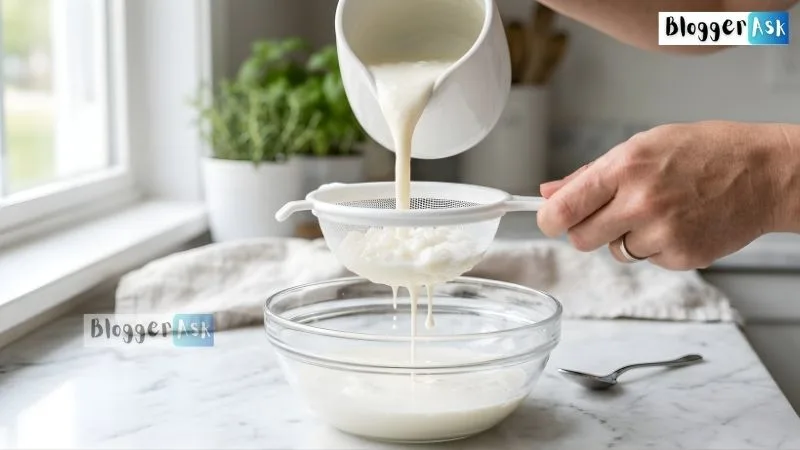
Ingredients: 500ml whole milk (not UHT) · 1–2 tsp milk kefir grains
Instructions:
- I put the grains in a clean jar and pour milk over them — no heating needed.
- I cover loosely and leave at 18–25°C (65–77°F) for 18–24 hours until thick and tangy.
- I strain to recover the grains (straight into fresh milk for the next batch) and refrigerate the finished kefir.
⏱ 18–24 hours | 📊 Beginner | 💰 ~$1.00–$1.80/litre
Uses: Drink with honey · Smoothie base · Salad dressing alternative
🧪 Taste test: Creamy, tangy, more complex than yogurt. 20 hours is my sweet spot.
⚠️ Safety: Lactose-intolerant people often tolerate this well — but start with a small amount. Not suitable for those with dairy allergies.
Common Mistakes I Made (So You Don’t Have To)
I learned most of what I know by getting things wrong. Here are the mistakes I made most often in my first year of fermentation — and exactly how to avoid them.
| Mistake | What Happened | How to Avoid It |
| Added SCOBY to hot tea | SCOBY died. No fermentation. Vinegary smell but no tang — just dead. | Always cool sweet tea to room temperature (below 30°C) before adding the culture. |
| Used tap water | Chlorine in tap water inhibited the cultures. Weak, flat kombucha. | Use filtered water or leave tap water to sit uncovered for 30 minutes before using. |
| Too-small starter liquid | pH not low enough at the start. Mould got in before the culture could protect itself. | Use at least 10–15% starter liquid by volume. More starter = lower pH = safer environment. |
| Opened sealed bottles too fast | Tepache ceiling incident. Enough said. | Burp bottles daily. Open slowly, over a sink, at an angle. Never point at your face. |
| Used iodised salt in kvass | Iodine inhibited the lactobacillus bacteria. Flat, unsour brine. | Always use non-iodised salt for any fermented vegetables or drinks. |
| Fermented in direct sunlight | Temperature fluctuations and UV light stressed the cultures. Off-flavours. | Keep ferments in a dark, consistently warm spot — a kitchen cupboard works well. |
How to Store, Drink Daily & Scale Up
Storage: All finished fermented drinks should go in the fridge once they reach the tartness you like. Cold temperatures slow fermentation significantly but don’t stop it entirely — so even refrigerated drinks continue to develop, just slowly. Consume most within 2–3 weeks. Milk kefir keeps up to 2 weeks. Beet kvass keeps 3–4 weeks.
Daily Routine: I don’t drink large amounts of any single ferment. My typical day: 80–100ml (3–3.5 oz) of kombucha or water kefir with lunch, occasionally a small shot of beet kvass before dinner. Starting small (50–60ml (2 oz)/day) and gradually increasing gives your gut time to adjust — some people experience temporary bloating when they first introduce live cultures.
Scaling Up: Once a recipe works well at 1 litre, doubling is simple. Just maintain the ratio of starter liquid to fresh tea/water. For SCOBY-based ferments, a single SCOBY can handle up to 3–4 litres in a larger vessel. Water kefir and milk kefir grains multiply naturally — you’ll have more than you need within a few months.
Keeping Cultures Alive: If you’re going on holiday, SCOBY goes into the fridge in sweet tea (it’ll hibernate). Kefir grains go in fresh milk in the fridge. Ginger bug can be refrigerated and fed once a week. All of them wake back up within 1–2 batches after returning to room temperature.
FAQs
Where do I get a SCOBY or kefir grains in the US?
Facebook groups like “Kombucha Brewers International” and local fermentation communities are the best starting point — members often share cultures for free. Amazon and Cultures for Health also stock them reliably.
How much should I drink daily?
Start at 50–80ml/day for two weeks, then gradually increase to 100–200ml. More isn’t always better.
My kombucha smells very vinegary — is it ruined?
No — it’s over-fermented for your taste but still safe. Dilute with sparkling water or use it as extra-strong starter. Taste earlier next batch.
White stuff is floating in my kombucha — safe?
Yes. Stringy strands are normal yeast. Skim white surface film (Kahm yeast) off kvass. Discard only if you see fuzzy coloured mould.
Can I drink these during pregnancy?
Consult your doctor first. Kombucha contains trace alcohol and unpasteurised bacteria — your healthcare provider should advise you directly.
Do these fermented drinks for gut health actually work?
Research is promising — especially a 2021 Cell study linking fermented food diets to increased microbiome diversity and reduced inflammation. But they’re not a cure for anything. Think of them as a valuable addition to a varied, balanced diet.
Conclusion
Three years on, I have a SCOBY hotel, a 14-month-old ginger bug, and water kefir grains I’ve shared with friends across New York. These gut-healthy fermented drinks have genuinely changed how I think about what I eat and drink every day — and making them at home is far more accessible than most people assume.
If you’re ready to start making your own probiotic drinks at home, pick one recipe and commit to a single batch this weekend. Start with tepache for instant gratification. Start with the water kefir recipe for a reliable daily habit. Start with the easy homemade kombucha when you’re ready for the full fermentation journey.
Try your first batch this weekend and tell me in the comments how it turned out!
© 2026 marie’s Kitchen · Personally tested by Marie, New York. For informational purposes only. Consult your doctor before making significant dietary changes.

With a strong interest in fitness and preventive wellness, I focus on sustainable habits rather than quick solutions. I write evidence-based content on nutrition, exercise, and mental well-being to support long-term healthy living.