Introduction
Acne can feel personal, but it’s usually not your fault. You can wash your face, drink water, and still wake up to a breakout before a big meeting, date, or photo day. The good news: many home remedies for acne can calm redness, reduce the look of swelling, and support your skin barrier—especially when breakouts are mild to moderate.
This guide breaks down home remedies for acne that works, what’s risky, and how to build a simple routine using safe, realistic, at-home options. If you’re dealing with painful cysts, widespread acne, or scarring, consider these natural remedies for acne as supportive care alongside professional help.
Understanding Acne and Breakouts
Acne happens when pores get congested with oil (sebum) and dead skin cells. That clogged pore can turn into:
- Whiteheads/blackheads (clogged pores with minimal inflammation)
- Papules/pustules (red, inflamed pimples)
- Cystic acne (deeper, painful bumps under the skin)
A real-life example: A new hair product or tight workout headband causes forehead pimples. That’s not “dirty skin”—it’s friction + sweat + buildup creating clogged pores.
Triggers include hormones, stress, makeup/hair products, sweat (“acne mechanica“), and diet. Spot patterns to avoid repeats, even with home remedies for pimples.
Why Home Remedies Still Work
Home remedies for acne work best when they do one of these jobs:
- Calm inflammation (less redness and tenderness)
- Support the skin barrier (less irritation and rebound oiliness)
- Provide mild antibacterial or oil-balancing effects (without stripping)
They’re especially helpful if your skin is sensitive, you’re overwhelmed by complicated routines, or you want budget-friendly options. Think of home remedies like “first aid” and daily support—not a cure-all.
Safety note: “Natural” doesn’t always mean gentle. Lemon juice, undiluted essential oils, and harsh scrubs can irritate skin and make dark marks more likely, especially after a pimple heals.
Best & Fastest Home Remedies for Acne
What Is the Best Home Remedy for Acne?
For most beginners, the best home remedy for acne is raw honey (short-contact mask) or aloe vera (soothing leave-on), because both are generally gentle and help reduce the look of irritation.
- Honey: soothing, moisture-supporting, and helps keep skin feeling balanced
- Aloe vera for pimples: cooling, calming, and helpful when skin feels inflamed or overtreated
If you only choose one: choose the option that feels calming, not “stingy.” Burning is not progress.
What Is the Fastest Home Remedy for Acne?
Fastest home remedy for acne targets swelling overnight:
- Ice compress (wrapped): quickly reduces redness and puffiness
- Hydrocolloid pimple patch (not a kitchen remedy, but an at-home staple): flattens “whitehead” pimples by absorbing fluid
A practical scenario: you have a painful red bump and an event tomorrow. Ice + a gentle routine + a patch overnight often looks better the next day than any harsh DIY trick.
What May Reduce the Appearance of Acne Fastest Naturally
No home remedy “kills acne” instantly in a medical sense, but a few options can reduce the appearance of active breakouts:
- Diluted tea tree oil spot treatment (best for small inflamed pimples)
- Green tea compress/toner (best for redness and oiliness)
- Clay mask (best for very oily skin and congestion, used sparingly)
If your skin is dry or sensitive, skip aggressive drying methods. Over-drying can trigger more irritation and breakouts.
How to Get Rid of Acne ASAP Using Home Remedies
Use a simple “calm and protect” approach for 48–72 hours:
- Cleanse gently (no scrubs)
- Ice for swelling (short sessions)
- Apply aloe vera for pimples or a honey mask (10–15 minutes, rinse)
- Spot-treat only if needed (diluted tea tree or sulfur if you use OTC)
- Moisturize (yes, even oily skin)
- Use SPF in the morning (dark marks worsen with sun)
This approach helps your skin recover faster because it reduces inflammation and protects your barrier.
Common Acne Myths
A lot of acne advice spreads because it sounds logical, not because it’s safe.
- Myth: “Dry it out and it’ll heal faster.”
Fact: Over-drying can increase irritation and lead to more oil production. - Myth: “If it stings, it’s working.”
Fact: Stinging often means barrier damage or irritation. - Myth: “Popping helps it go away.”
Fact: Popping increases the chance of dark spots, infection, and scarring.
Can Toothpaste Really Treat Pimples? (Myth vs Fact)
Toothpaste is one of the most common DIY acne myths. Some formulas contain ingredients that can feel drying, but they’re not designed for facial skin and may cause irritation, peeling, or a red “burn-like” patch.
If you want a safer “spot” alternative at home, try:
- Ice compress
- Hydrocolloid patch
- Aloe vera gel
- Diluted tea tree oil (patch tested)
Quick Acne-Clearing Methods at Home
How Can I Clear My Acne Fast at Home?
You can’t safely erase acne overnight, but you can make it look calmer and less noticeable quickly by focusing on inflammation control:
- Use a gentle cleanser morning/night
- Avoid picking, scrubbing, and fragrance-heavy products
- Apply a calming ingredient (aloe or cooled green tea)
- Use a pimple patch on whiteheads
A simple rule: fewer steps, less irritation, better results.
How to Get Rid of Acne Quickly at Home
For a “quick improvement” plan, prioritize consistency over intensity:
- Night 1–3: honey mask (10 minutes) + moisturizer
- Spot treatment only on active pimples
- Keep hair products off your face and change pillowcases
Small habits—like washing makeup brushes and wiping your phone screen—often matter more than another mask.
How to Reduce Visible Acne Naturally in 2–3 Days
In 2–3 days, your goal is usually:
- Reduce visible redness
- Calm swelling
- Prevent new irritation
Try this “2–3 day calm plan”:
- Morning: gentle cleanse + light moisturizer + SPF
- Evening: cleanse + aloe (thin layer) + moisturizer
- Optional: ice compress once daily + pimple patches overnight
If acne is severe, 2–3 days won’t “clear” it, but you can still reduce flare intensity.
What Is the #1 Cause of Acne?
There isn’t one universal cause, but the most consistent driver is pore congestion: oil + dead skin buildup + inflammation. Hormones often amplify this by increasing oil production, which is why many people break out around periods, stress spikes, or life-stage changes.
DIY & Natural Acne Solutions
Effective DIY Solutions for Clearing Breakouts
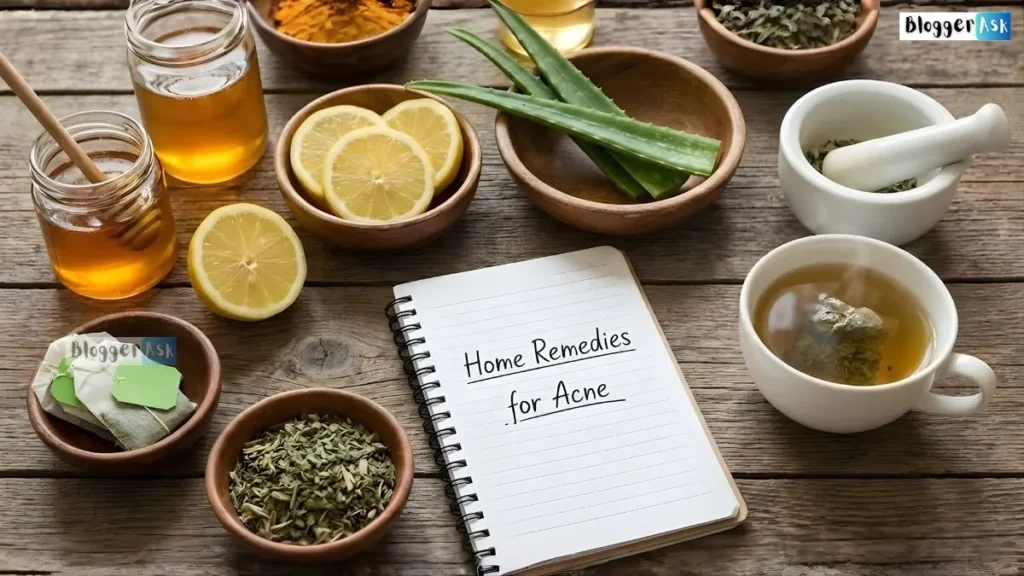
Here are beginner-friendly home remedies for acne that are commonly tolerated:
- Honey mask: apply a thin layer for 10–15 minutes, rinse
- Aloe vera gel: thin leave-on layer after cleansing
- Green tea toner: brew, cool fully, apply with cotton or a spray bottle
- Oat “soothing paste”: finely ground oats + water for irritated skin
Keep DIY mixes fresh. Don’t store “kitchen masks” for days—bacteria can grow quickly.
Do At-Home Remedies Actually Work for Acne?
They can work for mild breakouts and for reducing the look of inflammation, especially if your acne is triggered by irritation, barrier damage, or overuse of harsh products.
They typically won’t replace proven acne actives for persistent acne (like benzoyl peroxide, salicylic acid, adapalene), but they can be great support alongside a simple routine—especially if your skin is sensitive.
At-Home Remedies for Cystic Acne: What Really Helps
Cystic acne is deeper and often painful. Home care can support comfort, but it may not resolve the underlying inflammation on its own.
Supportive home steps:
- Don’t squeeze (higher scarring risk)
- Use a cool compress for pain and swelling
- Keep routine minimal and non-irritating
- Consider seeing a dermatologist if cysts recur or leave marks
If cystic acne is frequent or worsening, professional treatment is usually the fastest path to preventing long-term scarring.
Home Remedies for Acne Dermatologists Recommend
Dermatologists often recommend the principles behind home care:
- Gentle cleansing (no stripping)
- Non-comedogenic moisturizer (barrier support)
- Daily sunscreen (prevents dark marks from lingering)
- Avoiding picking and over-exfoliation
They may also support soothing add-ons like aloe, oatmeal, and fragrance-free products because they reduce irritation that can worsen breakouts.
Natural Ingredients That Help Fight Acne
Most Effective Natural Ingredients for Treating Acne at Home
These ingredients are popular because they’re relatively accessible and often well tolerated:
| Ingredient | Best for | How to use | Caution |
|---|---|---|---|
| Aloe vera | Redness, irritation | Thin leave-on layer | Patch test if sensitive |
| Raw honey | Mild inflamed pimples, dryness | Mask 10–15 min | Avoid if bee allergy |
| Green tea | Oiliness, redness | Cool toner/compress | Don’t use hot |
| Oats (colloidal/ground) | Sensitive, itchy, irritated skin | Soothing paste/mask | Keep it gentle |
| Clay (kaolin/bentonite) | Very oily skin, congestion | 1× weekly, short time | Can over-dry fast |
How to Get Rid of Pimples Naturally in a Few Days
In a few days, focus on reducing inflammation and preventing new clogged pores:
- Cleanse gently (twice daily max)
- Use aloe or green tea daily
- Use honey mask 2–3 times per week
- Spot-treat only when needed
- Keep hair oils/pomades away from facial skin
How to Calm Pimples Within 3 Days Naturally
A realistic 3-day routine:
- Day 1: Calm (aloe + moisturizer), ice if swollen
- Day 2: Support (honey mask + moisturizer), patch overnight
- Day 3: Maintain (green tea toner + SPF), avoid makeup-heavy looks if possible
This won’t erase every pimple, but it often reduces redness and flattens surface inflammation.
What Kills Pimples the Fastest Naturally
If you mean “fastest visible improvement,” the most reliable at-home combo is:
- Ice + pimple patch + gentle moisturizer
If you want a natural spot treatment, diluted tea tree oil may help, but irritation is common if you overdo it.
What Natural Ingredients May Help Reduce Acne
No natural ingredient is guaranteed to “kill acne” for everyone. Acne is complex. But natural options can reduce the look of acne by calming inflammation and supporting the skin barrier, which helps your skin heal more predictably.
Which Oil Can Help Remove Pimples
Some oils are more acne-friendly than others. The goal is to choose oils that are lighter and less likely to clog pores.
Generally acne-prone-friendly options:
- Jojoba oil (wax ester similar to skin’s natural oils)
- Squalane (lightweight, barrier-friendly)
- Rosehip oil (some people love it for post-acne marks; patch test)
Heavier oils (like coconut oil) can clog pores for many acne-prone people, even if they work well on the body.
Natural Oils & Ingredients Guide
Best Essential Oils for Acne-Prone Skin (Safe Use)
Essential oils are concentrated. Use them like you’d use hot sauce: a tiny amount, diluted, and only if your skin tolerates it.
Basic safety rules:
- Patch test first (inner arm for 24 hours)
- Never apply undiluted essential oils to the face
- Avoid using multiple essential oils at once
Common options:
- Tea tree oil: most studied for acne support; dilute to about 1%
- Lavender oil: may be calming for some, but can irritate others (less reliable for acne)
If you’re acne-prone and sensitive, you may do better skipping essential oils entirely and focusing on aloe, oats, and barrier care.
Popular Natural Remedies for Acne Scarring (Comparison Table)
“Acne scars” can mean two different things:
- Marks (red/brown spots after pimples, also called post-acne marks)
- True scars (indentations/texture changes)
Natural remedies mostly help marks, not deep scars.
| Remedy | Best for | Expected benefit | Notes |
|---|---|---|---|
| Daily sunscreen | Preventing dark marks from lasting | Biggest impact over time | Broad-spectrum SPF 30+30+ |
| Aloe vera | Post-breakout irritation | Soothing, comfort | Not a true scar treatment |
| Rosehip oil | Post-acne marks (some types) | Barrier support, glow | Patch test; not instant |
| Honey masks | Irritation + dryness | Calming, less flaky healing | Gentle supportive option |
| Vitamin C (OTC, not DIY lemon) | Dark spots | Brightening over weeks | Choose stable formulas |
If you have indented scars, in-office options (like microneedling or lasers) are usually more effective than home remedies.
Where to Find Reputable Natural Skincare Ingredients
Finding quality ingredients keeps your home remedies safe and effective. Focus on products with clear labels, minimal fillers, and reputable sourcing.
Quick shopping guide:
- Fragrance-free aloe vera gel: Look for pure or minimal-ingredient versions at drugstores, grocery stores, or online retailers like Target, Walmart, or Amazon. Check for “99% aloe” and no added alcohol.
- Raw honey: Choose local or grocery store brands (like Manuka if budget allows) from the health food aisle. Avoid “honey blends” with corn syrup.
- Essential oils: Buy from brands like Now Foods, Plant Therapy, or Aura Cacia that share third-party testing results. Skip dollar store oils.
- Clays (kaolin, bentonite): Get cosmetic-grade from beauty sections at Ulta, Sephora, or iHerb—not craft store clays meant for pottery.
Pro tip: Start with small sizes to test. If you’re acne-prone, prioritize “non-comedogenic” labels and avoid long ingredient lists with fragrances or preservatives.
Diet & Lifestyle Support for Clear Skin
Diet and Acne: Supporting Clear Skin Naturally
Diet doesn’t cause acne for everyone, but some people notice patterns. Instead of strict rules, try a 2–3 week “skin journal” approach: track breakouts alongside food, stress, sleep, and menstrual cycle timing.
Supportive habits:
- Consistent protein + fiber (helps steady blood sugar)
- Omega-3 sources (salmon, walnuts, chia)
- Hydration (especially if you use drying acne products)
- Sleep routine (skin repairs while you rest)
Foods That Trigger Acne
Common triggers reported by many people include:
- High-glycemic foods (sugary snacks, sweet drinks)
- Some dairy products (especially skim milk for some people)
- Whey protein (a common gym supplement trigger)
- Highly processed foods (varies by individual)
You don’t need to eliminate everything at once. Change one variable, watch your skin for 2–3 weeks, then adjust.
disclaimer
This article is for informational purposes only and does not replace professional medical advice. If your acne is severe, painful, or persistent, consult a licensed dermatologist or healthcare provider for personalized treatment.
Conclusion
Building a Consistent Natural Acne Routine
If you want home remedies for acne to work, consistency beats intensity. Build a routine you can repeat even on tired days:
- Gentle cleanser
- One calming step (aloe, green tea, or honey mask a few times weekly)
- Moisturizer
- Daily SPF
Once your skin is calmer, you can decide whether you want to add an OTC acne active—but even then, keep the base routine simple.
When to Combine Home Care With Professional Help
Consider professional help if:
- Acne is painful, deep, or cystic
- Breakouts are leaving marks or scars
- You’ve tried consistent home care for 6-8 weeks with little improvement
- Acne affects your confidence or daily life
Home care can still be part of your plan, but you shouldn’t have to “push through” worsening acne alone.
FAQ
What is the fastest home remedy for acne?
Apply aloe vera gel or a cool compress to help reduce visible redness and swelling. Spot-treat with properly diluted tea tree oil, which may help reduce inflammation for some people.
How can I get rid of pimples naturally at home?
Use honey masks, aloe vera gel, or green tea compresses. These ingredients calm inflammation and fight acne-causing bacteria gently.
Do home remedies actually work for acne?
Yes, especially for mild to moderate acne. Regular use of natural remedies like aloe, honey, and green tea can reduce breakouts and support clear skin.
Can toothpaste clear pimples overnight?
No. Toothpaste can irritate skin and cause burns or dark marks. Stick to gentle, natural remedies instead.
What essential oils are safe for acne-prone skin?
Tea tree, lavender, and rosemary oils are safe when diluted with carrier oils. Always patch-test before applying.
How can I reduce acne in 2–3 days naturally?
Calm inflammation with ice, aloe vera, and honey. Drink plenty of water and avoid oily, high-sugar foods to support skin from inside.
Are there home remedies for cystic acne that work?
Home remedies can reduce swelling and discomfort but cannot cure cystic acne. Aloe, honey, and ice may help, but persistent cysts need a dermatologist.
What natural ingredients help clear acne fast?
Aloe vera, honey, green tea, turmeric, and neem can reduce bacteria, calm redness, and improve overall skin health.
Which foods trigger acne flare-ups?
High-sugar snacks, processed foods, and excessive dairy may worsen acne. Focus on whole foods, berries, and omega-3-rich foods for healthier skin.
How often should I use home remedies for pimples?
Apply gentle treatments 2–3 times per week. Overuse can irritate skin or strip natural oils, making acne worse.

For the past decade, I’ve been researching personal finance, investing, and online income models. I break down complex money matters into simple strategies so readers can build wealth, avoid common mistakes, and make confident financial choices.